
Sermon 04.19.2026: Second Acts
Paul’s conversion is one of the most dramatic stories in scripture. But if you had told 20 year old Paul that 2000 years later we would know him as the most prolific writer about Jesus, he would not have believed it. What a second act! Do we give people space to live their second acts? Or do we decide that what we already know of them is all we need to know?
Scripture
Acts 9:1-19
Meanwhile, Saul was still breathing out murderous threats against the Lord’s disciples. He went to the high priest 2 and asked him for letters to the synagogues in Damascus, so that if he found any there who belonged to the Way, whether men or women, he might take them as prisoners to Jerusalem. 3 As he neared Damascus on his journey, suddenly a light from heaven flashed around him. 4 He fell to the ground and heard a voice say to him, “Saul, Saul, why do you persecute me?”
5 “Who are you, Lord?” Saul asked.
“I am Jesus, whom you are persecuting,” he replied. 6 “Now get up and go into the city, and you will be told what you must do.” 7 The men traveling with Saul stood there speechless; they heard the sound but did not see anyone. 8 Saul got up from the ground, but when he opened his eyes he could see nothing. So they led him by the hand into Damascus. 9 For three days he was blind, an d did not eat or drink anything.
10 In Damascus there was a disciple named Ananias. The Lord called to him in a vision, “Ananias!”
“Yes, Lord,” he answered.
11 The Lord told him, “Go to the house of Judas on Straight Street and ask for a man from Tarsus named Saul, for he is praying. 12 In a vision he has seen a man named Ananias come and place his hands on him to restore his sight.”
13 “Lord,” Ananias answered, “I have heard many reports about this man and all the harm he has done to your holy people in Jerusalem. 14 And he has come here with authority from the chief priests to arrest all who call on your name.”
15 But the Lord said to Ananias, “Go! This man is my chosen instrument to proclaim my name to the Gentiles and their kings and to the people of Israel. 16 I will show him how much he must suffer for my name.”
17 Then Ananias went to the house and entered it. Placing his hands on Saul, he said, “Brother Saul, the Lord —Jesus, who appeared to you on the road as you were coming here —has sent me so that you may see again and be filled with the Holy Spirit.” 18 Immed iately, something like scales fell from Saul’s eyes, and he could see again. He got up and was baptized, 19 and after taking some food, he regained his strength.
Saul spent several days with the disciples in Damascus.
Sermon
Second act stories are interesting to me. Especially when the second act seems so different from the first.
Maybe some of you are in the careers you planned to be in from the time you were young. But I thought I’d be speaking from a political lectern and not from a pulpit. Young me would also never have bet that I’d be one of the first of my friends to marry and have kids. And I also did not have San Francisco anywhere in my plans.
Thank goodness for a life that doesn’t turn out the way you expect it to. I wouldn’t change a single thing I didn’t plan.
Our story from the Book of Acts today tells us of the beginning of the apostle Paul ’s second act, as the church ’s first, and best read, missionary. It’s hard to remember that Saul was just doing his job when Luke describes him as “breathing threats and murder” against the disciples. He ’s a zealous Jew, which means his job was defending the faith well, zealously.
But we really know him after his name change. We know the dedicated and brilliant apostle Paul who traveled around the known world to share the love of Jesus. It is hard for us to remember his first act.
Imagine Saul was a hardcore MAGA congressman from the rural South, who had participated in the January 6 attempt to overturn the election, and had enabled President Trump’s behavior from the beginning, declaring the president an agent of God and Jesus’ best advocate on earth.
And then Saul, on the road to Damascus, saw the picture the president posted where he portrayed himself as Jesus, and that, combined with rising gas prices because of the unapproved war with Iran, made the scales fall from Saul’s eyes and had him decide he could no longer support the president.
Can we picture how difficult this transformation is now?
If Saul walked in here, after being on truth social for years, insulting us and calling us snowflakes and fake Christians, calling people to protest our church, what if he walked in here and told us that God had changed his heart and he wanted to be Calvary’s pastor and head of staff to preach a message of inclusion and welcome to people—how would that go?
I’m not equating zealous 1st century Jews with MAGA. I am trying to get us to inhabit the dissonance that Ananias and others would have been feeling about Paul’s conversion. And maybe how hard it was for Paul, himself.
The transformation of Saul in this story is remarkable.
The transformation of everyone else in this story may be even more remarkable.
Yes, because of his “road to Damascus” experience, Paul completely changes everything. He loses his job, his friends, his faith tradition, even his prestige and reputation. While we can appreciate what he gains—new life in Jesus Christ, etc.— it doesn’t erase what he ’s giving up in order to respond to Jesus.
This is often referred to as Saul ’s call story. It occurs to me that it is also “the call story of everyone else so that Saul can have a call story”.
Let ’s start with Ananias. First, he ’s the one, not Saul, who responds to God with “Here I am, Lord”. (Saul had asked “who are you, Lord”?) Ananias is a good, faithful Christian. And not afraid to ask God questions. “I appreciate the call, God, but lemme just tell you a bit about this Saul character. I know youve got a lot going on and might have missed a few of the horrible things hes done to your faithful people.”
Ananias is a great illustration of faithful discipleship. Willing to listen for God, to respond to God, to question God, and then to follow where God leads.
Please note that God hears Ananias ’questions and gives him an answer. Don ’t ever be afraid to question God. But when we question God, we best be willing to respond when God answers.
“Go, for he is an instrument whom I have chosen to bring my name before Gentiles and kings and before the people of Israel…”
Ananias, at this point, could have done a few things. He could have said, “nah, thanks. Im good. Someone else can take that message.”
He could have said, “fine, I'll do it.” And then gone and grabbed Saul by the collar and said, “alright you murderous scum, God wants to use you for some reason, but I dont like it and Im not going to pretend I endorse or forgive you for killing my friends. Let's go.”
Instead, he goes to Saul and says, ‘Brother Saul, the Lord Jesus, who appeared to you on your way here, has sent me so that you may regain your sight and be filled with the Holy Spirit.’
Despite his initial misgivings, he greets Saul as a brother, as family.
Everything changes for Saul because a stranger greets him as family.
Everything changes for us, because a Ananias greeted Saul as family, and Saul then was God ’s instrument to share the Word to the world.
As the story continues, Paul gets up, the scales come off his eyes, and he immediately goes out and begins to preach. By his own accounts in his letters, Paul is not a looker. He ’s not charismatic. His zealousness is his best feature.
And yet people still flock to his sermons. They know who he had been, and they give him a fair hearing, and are convicted by his preaching. “For several days he was with the disciples in Damascus, and immediately he began to proclaim Jesus in the synagogues, saying, ‘He is the Son of God.’ All who heard him were amazed and said, Is not this the man who made havoc in Jerusalem among those who invoked this name? And has he not come here for the purpose of bringing them bound before the chief priests?’ Saul became increasingly more powerful and confounded the Jews who lived in Damascus by proving that Jesus was the Messiah.”
What if nobody in the crowd had been willing to give him a listen? What if they decided that since they knew his first act, they knew everything they needed to know about his second act? Once a murdering jerk, always a murdering jerk?
It’s hard for us to put ourselves in that place with Paul because we know his second act. We know who he became.
Who are the people we meet today, however, whose second acts have not yet been written? Are we willing to trust that God still has a story for them? And that perhaps that story needs our participation?
What if the apostle Paul had only been judged for his past, known by what they already knew about him, with no opportunity to live into the future God was creating for him?
Sometimes we need second acts because we make mistakes and bad life choices.
Sometimes we need second acts because the structures of our society judge and limit people before they get a first act.
We are more likely to give people who seem to be like us a chance at a second act.
How many times have we heard “it was youthful indiscretion” or “that was locker room talk” about misbehavior from a politician we support, while deploring the same behavior from an opponent?
How do we know when someone has had a real conversion experience to a new future, a second act? How do we tell if we should listen to their preaching or walk away from the hypocrisy?
God is ever and always calling us into new relationships, and into deeper, family relationships. Relationships where grace is our calling, rather than judgment and exclusion.
God is also ever and always calling us toward redemption. Saul’s redemption was so profound it came with a name change. Most of our moments of redemption, I suspect, are more subtle. And redemption stories are also resurrection stories. We’re in the season of Easter, which is our reminder that we are resurrection people. Stories we once thought were over have chapters yet to be written.
Are we on the lookout for the places in our lives where God is dreaming of our redemption? Where God is calling us into new relationships? Where God is offering us resurrection out of stories we thought had ended?
I know not everyone is as big a fan of Paul as I am. We hear him used to defend all sorts of nonsense in the church today, including the idea that women should not be preachers. But once I read Paul in Greek, once I wrestled with the challenge of translating his letters, I discovered a different Paul than the one the internet trolls like to quote.
And I’m so thankful for Paul’s radical message of grace, for how he acknowledges that in Jesus, the world was turned upside down and through Jesus, God reached out to humanity in the most radical act of love. I’m forever grateful Saul got a second act so we could know Paul.
I read something on the internet this week, so we know it must be true, where someone who had been raised MAGA talked about how difficult it was to leave it. Here’s part of what they said:
I was raised in a religion where my entire self-worth for all of eternity depended on obeying church leaders and compliance with the rules without question. My value as a human being wasnt something I inherently had. It was something I had to earn, and could lose.
Permanently.
And it was my parents who taught me that Democrats were evil. Not social media or any other source. My parents at the dinner table, in the car, woven into daily life, Sunday school and every other moment of childhood. It was constant.
They also taught me that the USA was divinely chosen, that our freedoms were God given and uniquely ours, that we were the only ones who had freedom, and that the people who threatened those freedoms and Gods plan had a name: Democrats.
This wasn’t a political opinion I formed. It was handed to me before I had the tools to question it, fused completely with my religion, my family, my sense of right and wrong, and my eternal worth as a soul.
Republicanism, faith, and moral goodness weren’t separate things in my world. They were the same thing.
So when I voted for Trump, it wasn’t ignorance or cruelty. It was the only framework I had ever been given to understand the world.”
And I’m sure there are stories about families indoctrinating their children against Republicans too. I had a friend share with me recently that her family was less upset that a loved one was gay than they were that he was a Republican.
This author continued with: “for many of us, leaving MAGA meant rewriting our entire identity and sense of self-worth. Its not like changing your mind about a tax policy. Its dismantling the foundation of who you were told you are by the people who you loved the most.
“When you reject someone still climbing out, you may be pushing away someone doing the hardest psychological work of their life, often in isolation, often still surrounded by everyone they love who thinks theyre the one going wrong. What heavily swayed me wasn’t a debate or a fact that broke through. It was friendships with people who saw the world differently than I did.”[1]
How well equipped are we to receive someone’s second act?
Ananias could have stuck with the judgment he correctly was feeling about Saul. God told Ananias that God had other plans for Saul. And Ananias was able to hear God’s voice, and then go greet Saul as a brother, giving him a chance to redeem himself, and to do so as family. When we are family, and not strangers, we are connected one to another by bonds of mutual responsibility, respect, and hope.
And the truth is, family is not always protection from pain. Our family can let us down too. We ’re still called to treat each other as family, as if our lives depend on each other.
That said, this sermon is not suggesting we stay in toxic relationships with abusers. Remember Ananias didn ’t give Saul a second chance on Saul ’s word, but because he was sent by God. And Saul spent three days in fasting and repentance before Ananias went to him.
Saul was also called into different relationships in his conversion. Saul had things to repair and apologies to make. When you’ve been burning down the house, you don’t get to just apologize and go on with your day. You have to pick up the hose and put out the fire.
He too, had to decide to give up the righteous judgment he was carrying against the people who were practicing their faith differently than his tradition had taught him to do. When he encounters Jesus on the road to Damascus, Jesus says “Saul, Saul, why are you persecuting me?”
When we judge and persecute others to the extent that we do not help them toward redemption, toward their next act, we are persecuting God.
I’m not suggesting we get rid of consequences for actions that hurt people, or that violate our human compacts that strive to allow us to live together in peace. But if the consequences don ’t leave room for God ’s voice to speak, in the life of today ’s Sauls, in the lives of those called to hear him preach—then we miss our opportunity for redemption too.
It’s always easier to see the ways other people have missed opportunities for redemption than it is to see the ways I have done it. And so I continue to listen for God ’s voice. I continue to leave silence in each day, so God ’s voice might have an opportunity to penetrate the busy-ness of my routine. I try to catch myself before I rush to judgment against another person, so I won ’t hinder the dreams God is creating for someone else.
I work to be aware of the moments when I have deserved judgment and have instead received grace, and seek to be grateful for the opportunities to live into many second acts.
My call story to ministry is not as showy as Saul ’s. I was not blinded by the light. My companions on the road didn’t hear Jesus talking to me. My call story has been, instead, a series of second, third, and fourth acts, new chances offered by other people.
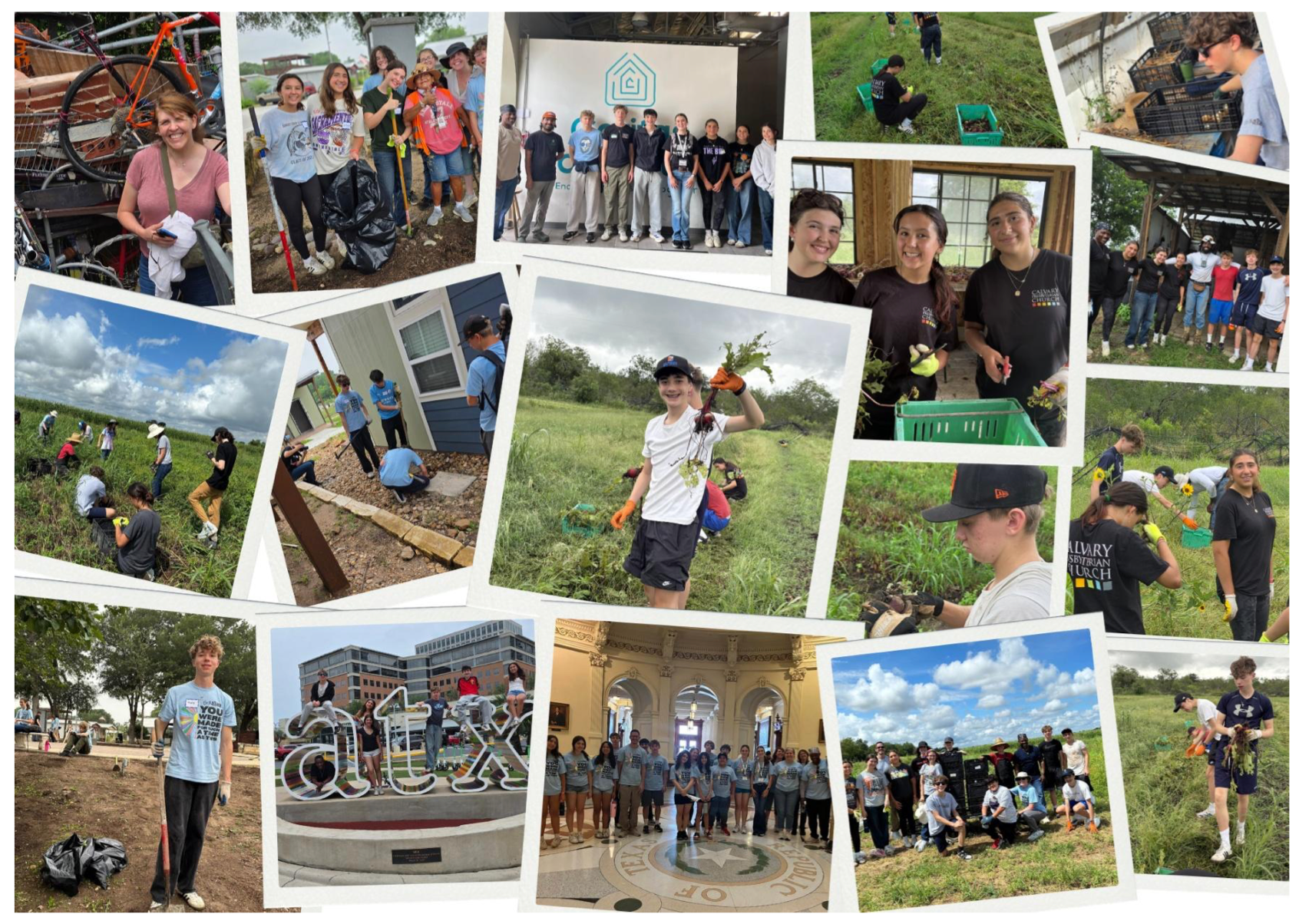
The work of our Matthew 25 Partners is about second acts, giving people a path out of abusive relationships, out of addiction, out of the challenges that have come to define them, so that they can be known in new ways.
When we support opportunities for people to live in safety, to be housed, educated, fed, and nurtured, we are answering God ’s call for second acts. This is one of the reasons your giving and serving matter. Together, we can do more than any of us can do on our own.
How about you? How has God used other people to speak God ’s mercy into your life, welcoming you as family? How has God ’s voice called you to come alongside someone in need of a second act, another chance?
Think of the stories that have yet to be written in those lives. May they be stories of hope, and transformation.
[1] https://www.threads.com/@crunchcat.supremeow/post/DXDM4A6D0P5/i-didnt-write-this-for-sympathy-or-forgiveness-i-wrote-this-because