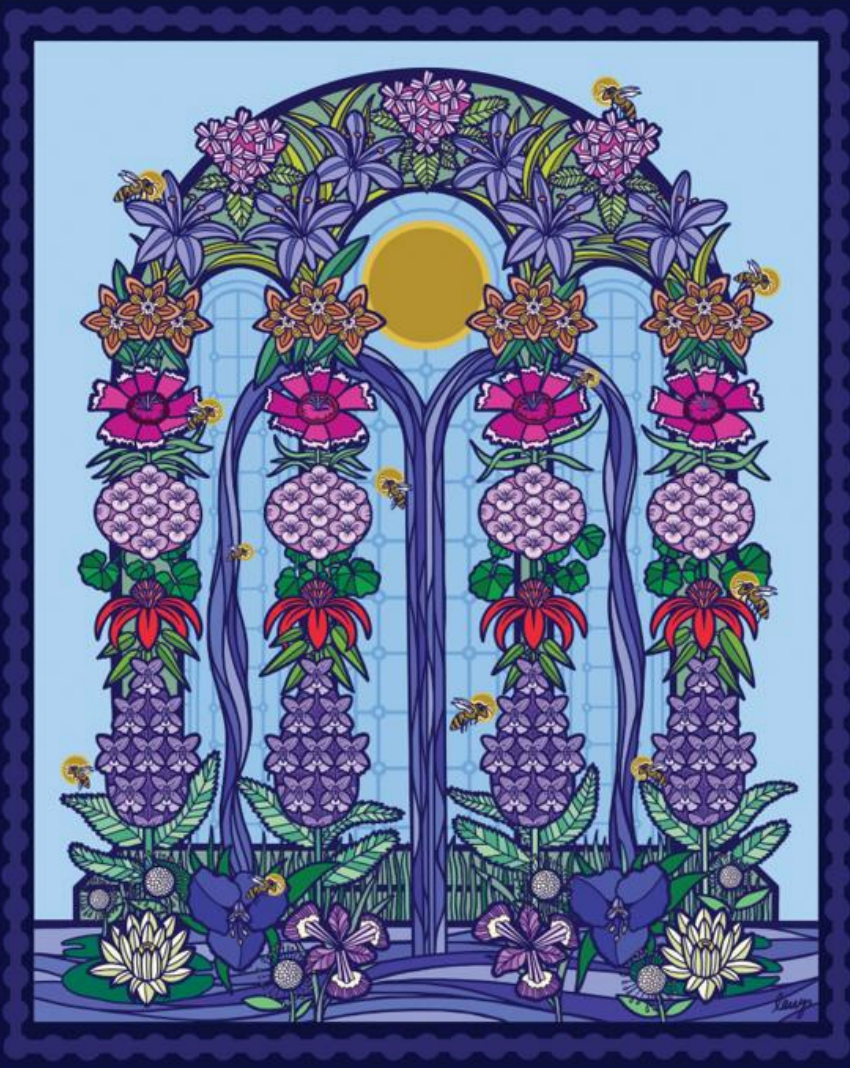

Sermon 11.08.2026: Here For Good
The prophet Jeremiah wrote a letter to people from his community who were living in exile. They did not want to be in Babylon, but sometimes people get caught up in world events and end up where they wouldn't have chosen to go. Jeremiah doesn't pretend they aren't in exile. He does tell them to care for the community where they have been sent in exile, to plant deep roots in foreign soil, to build a home that is not in their home. How are we to use our gifts and live our lives in light of this message from Jeremiah?
Scripture
Jeremiah 29:1-7
These are the words of the letter that the prophet Jeremiah sent from Jerusalem to the remaining elders among the exiles, and to the priests, the prophets, and all the people, whom Nebuchadnezzar had taken into exile from Jerusalem to Babylon. This was after King Jeconiah, and the queen mother, the court officials, the leaders of Judah and Jerusalem, the artisans, and the smiths had departed from Jerusalem. The letter was sent by the hand of Elasah son of Shaphan and Gemariah son of Hilkiah, whom King Zedekiah of Judah sent to Babylon to King Nebuchadnezzar of Babylon. It said: Thus says the Lord of hosts, the God of Israel, to all the exiles whom I have sent into exile from Jerusalem to Babylon: Build houses and live in them; plant gardens and eat what they produce. Take wives and have sons and daughters; take wives for your sons, and give your daughters in marriage, that they may bear sons and daughters; multiply there, and do not decrease. But seek the welfare of the city where I have sent you into exile, and pray to the Lord on its behalf, for in its welfare you will find your welfare.
Jeremiah 32:1-3, 6-15
This is the word that came to Jeremiah from the Lord in the tenth year of Zedekiah king of Judah, which was the eighteenth year of Nebuchadnezzar. The army of the king of Babylon was then besieging Jerusalem, and Jeremiah the prophet was confined in the courtyard of the guard in the royal palace of Judah. Now Zedekiah king of Judah had imprisoned him there, saying, “Why do you prophesy as you do? You say, ‘This is what the Lord says: I am about to give this city into the hands of the king of Babylon, and he will capture it. Jeremiah said, “The word of the Lord came to me: Hanamel son of Shallum your uncle is going to come to you and say, ‘Buy my field at Anathoth, because as nearest relative it is your right and duty to buy it.’ “Then, just as the Lord had said, my cousin Hanamel came to me in the courtyard of the guard and said, ‘Buy my field at Anathoth in the territory of Benjamin. Since it is your right to redeem it and possess it, buy it for yourself.’ “I knew that this was the word of the Lord; so I bought the field at Anathoth from my cousin Hanamel and weighed out for him seventeen shekels[a] of silver. I signed and sealed the deed, had it witnessed, and weighed out the silver on the scales. I took the deed of purchase—the sealed copy containing the terms and conditions, as well as the unsealed copy— and I gave this deed to Baruch son of Neriah, the son of Mahseiah, in the presence of my cousin Hanamel and of the witnesses who had signed the deed and of all the Jews sitting in the courtyard of the guard. “In their presence I gave Baruch these instructions: ‘This is what the Lord Almighty, the God of Israel, says: Take these documents, both the sealed and unsealed copies of the deed of purchase, and put them in a clay jar so they will last a long time. For this is what the Lord Almighty, the God of Israel, says: Houses, fields and vineyards will again be bought in this land.’
Sermon
I love the prophet Jeremiah, but I find him better in small doses. I had a previous congregation read through the Bible and many of them tapped out by the time we got to Jeremiah because going through his letter was too difficult, too depressing. And I think Jeremiah’s own community would have agreed with that assessment, because they put him in jail to try to stop his prophecy. He was being detained by the King of Judah for having told an inconvenient truth—that Jerusalem was to be sacked by Babylon. And that is one of the hard things about being prophetic. It is hard to proclaim truth to yourself in a cave.
Prophecy is an act of a community.
It might have been more prudent for Jeremiah to quietly mumble under his breath that Babylon was going to sack the city, but that wouldn’t have been prophecy.
And communities don’t always like the prophecy they receive. In this case, Jeremiah is arrested. The King, himself, is under siege. We can picture him hiding in a secure location in the castle, unable to go about his life.
The only thing not constrained or locked up is the Word of God, which continues to come to Jeremiah.
But this time the Word is not doom and gloom. These messages from chapters 29 and 32 are about hope. In chapter 29, the hope takes place in the midst of exile. Build houses right now, where you are. Plant gardens, right now, where you are. Marry and have children, right now, where you are, even when the world is falling apart.
Chapter 32, though, is about a real estate transaction, to make future plans secure for after the exile. Remember that for Israel, real estate really matters. After the exodus, the tribes are each assigned land. And they are given very specific instructions on how to keep it in the family. You pass it down to your son. And then down to his son. There was even—gasp—a provision for daughters to inherit the land if no male relatives were to be found. If no distant cousins could be unearthed to work the land, only then could it go outside the family. But the family still had the right of redemption.
So, when Jeremiah’s cousin comes to visit him in jail, it is to sell him a nice piece of property that has been in the family since the exodus. Property that needs to be redeemed so it can stay in the family. And Jeremiah says, “sure, why not? I’ll buy the family land in Anathoth.”
“But wait!” you say. Now is NOT the time to be buying land near Jerusalem! Babylon is singlehandedly ruining the Jerusalem real estate market. Exile and war are very bad for housing values. Also, you’re in jail and aren’t going to be doing any remodeling projects from prison, Jeremiah.
Jeremiah buys the land and instructs the deed to be put in a clay jar so it can be kept safe.
For thus says the LORD of hosts, the God of Israel: Houses and fields and vineyards shall again be bought in this land.
Jeremiah’s risky real estate transaction is a radical act of hope for the people of Israel.
The war and destruction they see around them will not have the final say. For thus says the LORD of hosts, the God of Israel: Houses and fields and vineyards shall again be bought in this land.
The failure of the political system in Israel does not mean that Israel has no hope.
God’s Word of hope will come to the people when all around is under siege and when all hope seems lost.
Houses, and fields, and vineyards shall again be bought in this land.
What Jeremiah realized was this—what you do TODAY matters for the future. You can’t just say, “I’m going to keep my eyes on that little piece of property, and then when all of this craziness is over, I’ll buy it and work toward making a better community.”
If you want to give your community hope, you can’t always wait and join in once the danger is past. You have to act now, to redeem the property that keeps your family’s claim alive, to make what the world would claim is a risky investment, to show your community that you are more than words, to work for good in your world.
Jeremiah could have said, “Jerusalem, I love you. God says things will be better at some point in the future, and I’m sure that’s right. We’ll have a great time! But right now, I’m packing up and moving to Boca Raton.”
In the act of redeeming his family’s land, of investing in land under occupation, was God’s word given concrete form. And the truth is, we are often in that in between time that Jeremiah describes for the people of Israel. Babylon may or may not be coming for us, but it can feel like we’re in that in between space. Israel is not in the glory days of the past, when King David was on the throne (and if you read scripture, you’re reminded that those glory days were complicated in any case). They aren’t in the past when everyone thought they were the leader of the free world. And they definitely aren’t in the future they wanted to be in yet.
For us in the US, the political realm may be about to turn after this week’s elections—and we may have different opinions about that—but what will be in the future is not quite clear and whatever we loved about the past is not going to be returning exactly as it was.
So what good are we going to do, how are we going to live while we're in an in between time?
San Francisco is not the same shut down place it was when I moved here in 2020, but we’ve still got some things to work on. Affordability of housing. The growing wealth gap. A WNBA season that lasts year round so I don't have to wait until next May for my basketball team to come back.
And here at Calvary, we’re not anywhere close to being sent to exile as Jeremiah talked about, but we’ve got a little in between too. Anytime there is a pastoral transition, it marks a change from a particular season to the unknown future season. And we’ve been living in an in-between since June, when the session approved a new vision and mission and we began deciding what ministries to carry forward and what to set down.
What we do for good now matters.
In the in between time, our call is to claim God has a future with hope for our community with our words and with our actions.
Standing with people at their ICE check-ins is a lot like buying land at Anathoth during an invasion.
Some might tell us our presence doesn’t matter. We aren’t lawyers. We can’t stop agents with guns. But our presence does matter, reminding the people in line they aren’t alone. It is making an investment for a future with hope.
Houses and fields and vineyards shall again be bought in this land.
Some of you saw our notice a few months ago that we did not have the capacity on staff to pull off the Thanksgiving dinner this year. And you may see an announcement in the bulletin today about how you can sign up to help with that meal. That’s because some volunteers stepped up and said they would take it on. But they will need your help for it to work. If providing a meal on Thanksgiving to people who would otherwise be alone on that holiday is important to you, I invite you to find the table during coffee hour and find out how you can support it to make it happen.
Houses and fields and vineyards shall again be bought in this land.
Our stewardship campaign, Here For Good, is being dedicated this morning. As the session works to set the budget for 2027, they need your pledges to set a reasonable budget. One that provides for the present and makes dreams for the future. Making a claim with your money for the work of this congregation is one way to speak prophetically as Jeremiah’s land purchase did. We invite you to prayerfully consider the level at which you can pledge to the budget of the church. If everyone contributes something, we will have what we need to do good.
The session seeks to be faithful and responsible stewards of the budget of the church, but they are also seeking to dream for the future.
We pray you will join in this concrete act of hope for the future. And this morning we celebrated new members joining the church, in front of all of us as witnesses to their promise. If you’re interested in considering membership as one of the ways we make promises for the future with hope, there’s a new member class after coffee hour today. Please join us.
So here we are, in between. A pastor we love is getting ready to go. A budget for next year is waiting to be filled with our hopes. New friends are joining us. And the world outside these doors is shifting, and for many of us there’s hope in the air.
Jeremiah doesn’t tell us to wait for the in-between to end. He tells us to plant the garden. To sign the deed. To seal it in a clay jar so that it lasts, so that someone, someday, can open it and find that we believed. Prophecy is an act of community, and so is hope. We are the inheritors of the deeds in clay jars that 172 years of Calvary members left for us.
Victor said this morning that he trusts the future God has in store for Calvary. I trust it, too. Not because it’s always clear to see, but because God has a habit of speaking hope into places in transition.
We’re here for good, building on the foundation of this congregation in this city, and seeking to put God’s goodness into the word.
So let’s build here. Plant here. Pledge here. Welcome here. Show up here.
For thus says the Lord of hosts, the God of Israel: Houses and fields and vineyards shall again be bought in this land.
Amen