
Sermon 10.18.2026: Remembering the Future
Like the family stories we tell again and again, retelling our congregation’s “origin story” can reveal our core values and key commitments as people of faith, remind us of our own courage and calling, and invite us to recommit to following God’s purposes in our lives. These stories are important to retell, to continue passing the torch, so to speak, from generation to generation, as Joshua does with a new generation of Israelites that has arrived in the Promised Land after 40 years of wandering in the wilderness. Our church story tells us not only where we have been, but also shapes our expectations and our hopes for the future.
Scripture
Joshua 24:1-15
The Covenant Renewed at Shechem
24 Then Joshua assembled all the tribes of Israel at Shechem. He summoned the elders, leaders, judges and officials of Israel, and they presented themselves before God.
2 Joshua said to all the people, “This is what the Lord, the God of Israel, says: ‘Long ago your ancestors, including Terah the father of Abraham and Nahor, lived beyond the Euphrates River and worshiped other gods. 3 But I took your father Abraham from the land beyond the Euphrates and led him throughout Canaan and gave him many descendants. I gave him Isaac, 4 and to Isaac I gave Jacob and Esau. I assigned the hill country of Seir to Esau, but Jacob and his family went down to Egypt.
5 “‘Then I sent Moses and Aaron, and I afflicted the Egyptians by what I did there, and I brought you out. 6 When I brought your people out of Egypt, you came to the sea, and the Egyptians pursued them with chariots and horsemen[a] as far as the Red Sea.[b] 7 But they cried to the Lord for help, and he put darkness between you and the Egyptians; he brought the sea over them and covered them. You saw with your own eyes what I did to the Egyptians. Then you lived in the wilderness for a long time.
8 “‘I brought you to the land of the Amorites who lived east of the Jordan. They fought against you, but I gave them into your hands. I destroyed them from before you, and you took possession of their land. 9 When Balak son of Zippor, the king of Moab, prepared to fight against Israel, he sent for Balaam son of Beor to put a curse on you. 10 But I would not listen to Balaam, so he blessed you again and again, and I delivered you out of his hand.
11 “‘Then you crossed the Jordan and came to Jericho. The citizens of Jericho fought against you, as did also the Amorites, Perizzites, Canaanites, Hittites, Girgashites, Hivites and Jebusites, but I gave them into your hands. 12 I sent the hornet ahead of you, which drove them out before you—also the two Amorite kings. You did not do it with your own sword and bow. 13 So I gave you a land on which you did not toil and cities you did not build; and you live in them and eat from vineyards and olive groves that you did not plant.’
14 “Now fear the Lord and serve him with all faithfulness. Throw away the gods your ancestors worshiped beyond the Euphrates River and in Egypt, and serve the Lord. 15 But if serving the Lord seems undesirable to you, then choose for yourselves this day whom you will serve, whether the gods your ancestors served beyond the Euphrates, or the gods of the Amorites, in whose land you are living. But as for me and my household, we will serve the Lord.”
Sermon
The setting is Schechem, where God first spoke to Abraham. The people Israel have come a long way, out of slavery in Egypt, through the wilderness, across the Jordan into Canaan where they battled against the inhabitants and divided the land among the tribes. A whole generation has passed. Moses has died and Joshua has taken over leadership. He reminds the people what God has done for them. God has decided to be their God. God delivered them from slavery and oppression and brought them here. God has been and will continue to be faithful. Nothing they have done or ever will do will cause God to abandon them. But in light of what God has done for them, they must decide who they will be. “Choose this day whom you will serve.” Choose this day to be God’s people.
The people cheer: “Of course, we’re for the Lord!” But Joshua doesn’t accept their first response. It makes you wonder: Are the people shuffling their feet, looking away, trying to avoid eye contact with him? Does he notice a few people have their fingers crossed? He reminds them not once but three times to put away the other gods, the foreign gods that are so tempting because they aren’t as demanding as the God of Israel. Those other gods will settle for casual pledges, an occasional ritual, a few songs. A decision for the God of Israel isn’t that easy. This is the God that commands, “You shall love the Lord your God with all your heart, and with all your soul, and with all your mind, and with all your strength.” That’s pretty much everything, right? Love God with all you have. What this God requires is a whole life-commitment that will impact every dimension of life. Unlike those other little “g” gods, the God of Israel is committed to neighborly justice and the care of the weak and vulnerable. A decision for God means a decision for loving our neighbors; for compassion, for mercy, for economic justice; for forgiveness, reconciliation, and healing.
Now, if you read the entire Book of Joshua, the chapters leading up to this moment don’t describe that kind of God. This passage glosses over the highly problematic parts of Joshua: violence, conquest, and even genocide. The Joshua account dehumanizes the native people who already lived in the land of Canaan, reducing them entirely to “the other,” and gives little moral consideration to their utter destruction. The first thing you should know is Joshua is NOT a history book. We don’t really know how the people Israel came to this region of the Fertile Crescent; the archaeological evidence doesn’t support the stories told in Joshua. But even if it isn’t factual, there’s great risk in ignoring these problems in Joshua, especially given the history of colonization and violence in our own country and elsewhere. This story of moving in and taking the land is way too familiar. The book of Joshua seems to glorify violence in the name of religion, and worse still, imagines that God is the one who makes it happen.
Our passage this morning demands, “Choose this day whom you will serve.” The Israelites in the passage must choose whether to be faithful to God and the covenant. For us today, that question also means we need choose between a God of conquest and violence, and a God who intends to bring divine blessing to the entire world.
But before the people are faced with making a choice, Joshua reminds the people what God has done for them. He recites their history and they recite it back to him. Joshua does this not for the sake of nostalgia but to point them toward the future. As I mentioned at the beginning of the service, our stories not only tell where we’ve been, they also shape our expectations and hopes for where we’re headed.
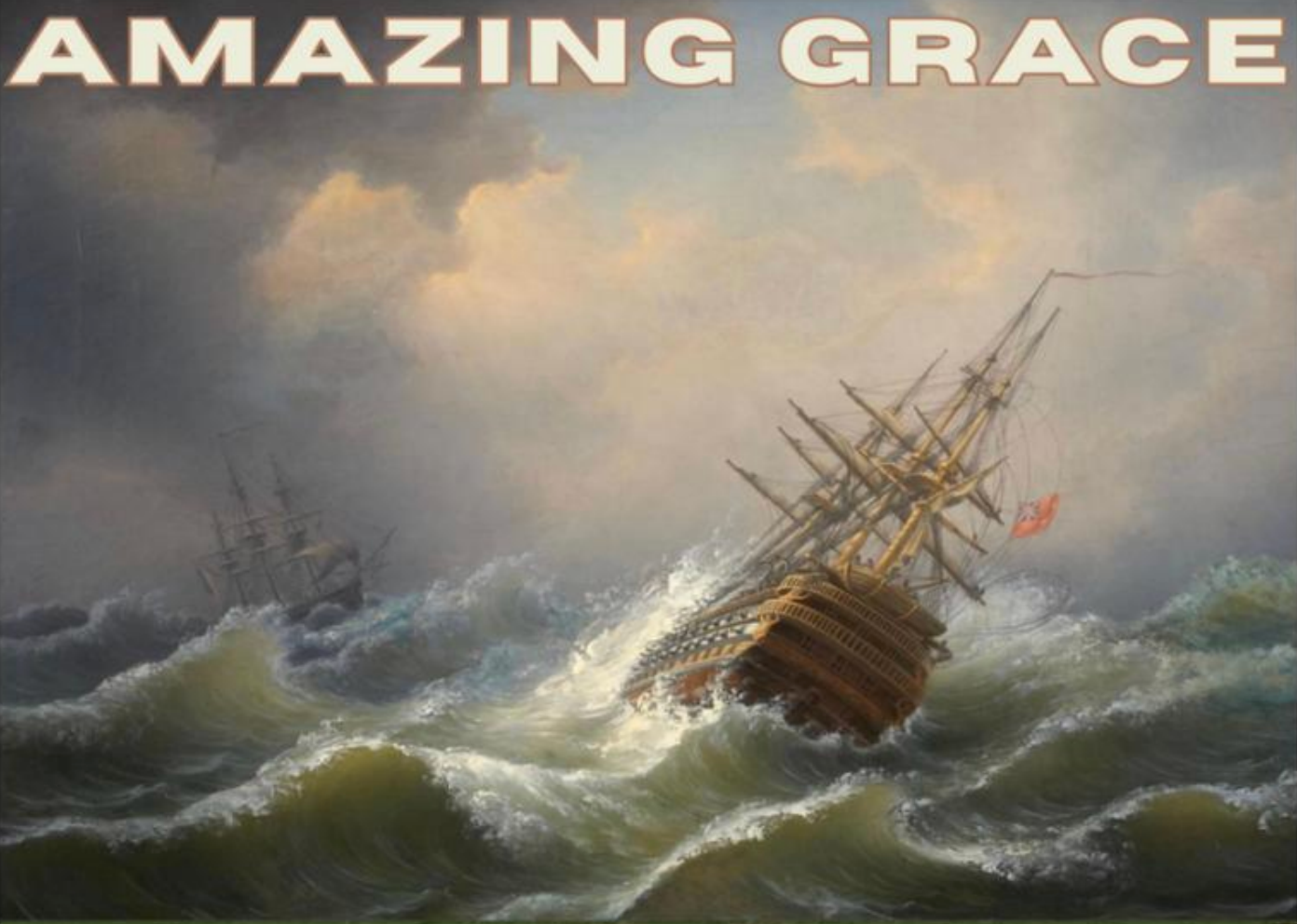
In her studies of mainline Protestant churches, Diana Butler Bass ran into one particular story again and again. She calls it the Titanic story. There are people who think of mainline Protestant denominations like the Presbyterian Church as a doomed ocean liner. The ship has hit an iceberg – in the form of political conflict, decline in membership, or some other crisis – and it’s sinking. Many people still remember the decades after World War II when it seemed as though everyone went to church and brought three or four kids along. Today, our country has fewer children, and fewer people connect with organized religion, so people remark, “We’re going down,” or “We can’t turn this ship around.” Bass says she heard one church goer refer to her minister as “the chaplain on the Titanic.” [i]
But what if the Titanic isn’t really the story? The story here in Joshua begins with God’s promise that spans all the ages and all the stories: We hear, “Thus says the Lord, the God of Israel: Long ago your ancestors ...” and then God reaches way back to Abraham. “And Remember Egypt?” says God. “Remember when things were at their darkest, and I brought you out of slavery, and stayed with you even in the wilderness?” And then God points to the future. “Choose this day whom you will serve.” Choose now whom you will serve going forward. God is the One that draws them – and us – into a hopeful future.
In Bass’s study of mainline congregations, she found that the approach that encouraged and nurtured vitality in a congregation was one deceptively simple principle: “know your story and live it.” Know your story, and live it. She said some people know their congregational stories but don’t connect them to what’s going on now. Others don’t reflect on the stories and their meaning at all. “In vital mainline churches,” she writes, “[people] knew their stories and lived them.” These stories became a resource of hope, and for change. Luther E. Smith Jr. calls this “prophetic remembering.” [ii] We remember our past because it points to the future.
So today’s passage offers us an opportunity to recall and reclaim Calvary’s story, to consider what God has done through and for this congregation, and how it points to Calvary’s future. A few years ago, Calvary’s Director of Children and Family Ministries, Alison Faison, wrote a children’s book called You Are a Calvary History-Maker. It has stories researched by beloved Calvary member and amateur historian Joe Beyer, as well from Carol Green Wilson’s little book on Calvary’s history from 1854 to 1979. [iii] You may already know that Calvary was established in 1854 when San Francisco was a booming gold rush town. The organizing pastor, William Anderson Scott, whose portrait is in the library, was hung in effigy not once but twice. The first time was because he opposed the vigilantes who took the law into their own hands; it was a courageous stand against mob justice. The second time, however, was because he was a Confederate sympathizer; in fact he’d been a slave owner. That time, he was run out of town. Scott, like Joshua, isn’t easily categorized as all good or all bad. After the Civil War when it was safe to return, Scott was one of the founders of the San Francisco Theological Seminary, where I now serve as Dean. Maybe part of remembering our past is remembering what needed to change, and how far we’ve come.
In 1879, yet another pastor of Calvary, John Hemphill, was threatened by a mob. He was threatened because he defended the rights of Chinese immigrants. In the 1870’s Sarah B. Cooper taught an adult Bible class at Calvary that became so popular it had to be moved into the main sanctuary. Cooper founded one of the first free kindergartens in San Francisco, funded by that Bible study class. Near the carousel in Golden Gate Park there’s statue dedicated to Cooper. In the 1890’s, Calvary member Donaldina Cameron established Cameron House in Chinatown, a ministry that saved over 3,000 Chinese women and girls from trafficking and violence.
Wilson’s little book tells us that Calvary didn’t elect women as deacons until 1952; one was Jane Newhall, whom many of you still remember. It wasn’t until 1965 that Calvary elected a woman as an elder. Again, it was Jane Newhall; this isn’t ancient history. Calvary’s first woman pastor, Assistant Pastor Deborah Wright, was called in 1979. Today, half of Calvary’s elders and two of your three pastors are women.
It makes sense that up here in Pacific Heights, part of Calvary’s past was being the church that attracted the social elite, and it’s also a church that became a Matthew 25 church, committed to feeding the hungry, clothing the unclothed, housing the unhoused, and loving those who are pushed aside and threatened by unjust structures. For decades Calvary has served neighborhood senior adults regardless of church affiliation, offering a sense of community along with stimulating programs. Way back in the ‘90’s, Calvary gave office space to the Covenant Network of Presbyterians, an organization advocating for LGBTQ ordination and marriage before they was allowed by our denomination. Calvary’s also the church that formed the Racial Equity Initiative, unabashedly declaring that “Black Lives Matter,” immigrants are welcome, and God loves you if you’re gay, straight, bi, trans, and every other expression of the human condition. Pack-a-sack, Martin de Porres; traditional but vibrant worship and stunningly beautiful music: you could tell many more stories. And of course, part of Calvary’s history is that there would be no history or future without the generosity of the people who came before us. And yes, this is the season, that once-a-year season, when leadership reminds you of that fact.
Maybe what the violence and tribalism in Joshua show us is that we can learn from the good stories and from the troubling ones, and sometimes it isn’t even clear which is which when you’re in the middle of it. When Joshua says, “Choose this day whom you will serve,” he means choose to put one foot in front of the other on the path of faith. We may not know exactly where that path leads, but we know that God has been gracious and active in our lives and in this congregation for 172 years. The invitation is to choose now how you will respond to God’s grace, how you will let God shape your life – every part of your life – and how you will let God shape this community.
That’s why Joshua says, “Choose this day.” Choose today even if you can’t see the future perfectly, but choose with your best hopes, just like the people who organized Calvary in 1854, and just like the people who shepherded it for the last 172 years. We stand on their shoulders; on the shoulders of faithful people who chose to trust that God will continue to lead us, Jesus will teach us, and the Spirit will guide us. Choose today so that you might become the shoulders on which others will stand in the future: Claire Elizabeth, who was baptized this morning, and the kids upstairs in confirmation class. As Alison wrote, whether you’ve been sitting on these velvet pew cushions half your life or only watched a few services online in your jammies, “You are a Calvary History-Maker.”
And doesn’t that make Calvary’s story more like Voyager than the Titanic? Doesn’t that make us more like explorers? We are in uncharted territory. The world today, San Francisco today, church today is different from 1854, and 1952, and even 2019 before the Pandemic. But Calvary’s story has always been one of looking toward the horizon, envisioning new ways to be God’s congregation.
Today, Calvary’s vision is “amplifying God’s story of justice and love in San Francisco and beyond.” It’s a powerful vision, and it grew out of Calvary’s story; your story. So: Know your story. Live it. And remember the future it will create.
May it be so for you and for me. Amen.
© Joanne Whitt 2026 all rights reserved.
i
Diana Butler Bass, “Living the Story,” http://www.alban.org/conversation.aspx?id=3386
ii Luther E. Smith Jr., Hope Is Here: Spiritual Practices for Pursuing Justice and Beloved Community (Louisville, KY: Westminster John Knox Press, 2023), 76.
iii Carol Green Wilson, Many Years One Message: Calvary Presbyterian Church: 1854 – 1979 (San Francisco, CA: [s.n.], 1979).