
Sermon 04.26.2026: We Are All Here
When the earthquake opens every door and every chain falls loose, Paul and Silas don’t run. That inexplicable refusal — we are all here — is what converts a jailer, and what might yet convert us.
Scripture
Acts 16:16-34
Paul and Silas in Prison
16 One day as we were going to the place of prayer, we met a female slave who had a spirit of divination and brought her owners a great deal of money by fortune-telling. 17 While she followed Paul and us, she would cry out, “These men are slaves of the Most High God, who proclaim to you[a] the way of salvation.” 18 She kept doing this for many days. But Paul, very much annoyed, turned and said to the spirit, “I order you in the name of Jesus Christ to come out of her.” And it came out that very hour.
19 But when her owners saw that their hope of making money was gone, they seized Paul and Silas and dragged them into the marketplace before the authorities. 20 When they had brought them before the magistrates, they said, “These men, these Jews, are disturbing our city 21 and are advocating customs that are not lawful for us, being Romans, to adopt or observe.” 22 The crowd joined in attacking them, and the magistrates had them stripped of their clothing and ordered them to be beaten with rods. 23 After they had given them a severe flogging, they threw them into prison and ordered the jailer to keep them securely. 24 Following these instructions, he put them in the innermost cell and fastened their feet in the stocks.
25 About midnight Paul and Silas were praying and singing hymns to God, and the prisoners were listening to them. 26 Suddenly there was an earthquake so violent that the foundations of the prison were shaken, and immediately all the doors were opened and everyone’s chains were unfastened. 27 When the jailer woke up and saw the prison doors wide open, he drew his sword and was about to kill himself, since he supposed that the prisoners had escaped. 28 But Paul shouted in a loud voice, “Do not harm yourself, for we are all here.” 29 The jailer[b] called for lights, and rushing in, he fell down trembling before Paul and Silas. 30 Then he brought them outside and said, “Sirs, what must I do to be saved?” 31 They answered, “Believe in the Lord Jesus, and you will be saved, you and your household.” 32 They spoke the word of the Lord[c] to him and to all who were in his house. 33 At the same hour of the night he took them and washed their wounds; then he and his entire family were baptized without delay. 34 He brought them up into the house and set food before them, and he and his entire household rejoiced that he had become a believer in God.
Sermon
It Wasn’t the Earthquake.
During my seminary years, I studied preaching with the great J. Alfred Smith, Sr., the prophet of Allen Temple Baptist Church,
[1] in Oakland. Dr. Smith invited us — his mostly lily white preaching class — to attend a revival service at Allen Temple, a historic Black congregation. We sat together and tried not to stick out. LOL.
As the opening hymns were winding down, the sanctuary was suddenly rattled by an earthquake. Lights swayed, people gasped, worship came to a halt.
What should we do? What’ s coming next?
A well-dressed gentleman appeared in the pulpit. He began sharing his testimony on the power of God as displayed in the earthquake. Behind him, a line was forming. So many people wanting to extol the shaking the foundations of this violent world. The organ ist jumped in with underscoring and staccato punctuations. We had revival.
That night at revival, I learned two things.
- If the ushers think the offering plates are not filled sufficiently, they can send them back down the pew. But that’s a story for another sermon, perhaps stewardship season!
- What preacher can resist a good earthquake, or any natural disaster for that matter.
I share this story because most Paul & Silas sermon focus on the earthquake. I’m going to resist that
preacherly impulse. The story of Paul and Silas is not about the chaos of an earthquake. It’s about
transformation of the human soul when engaged with others in acts of solidarity. It’s about how the Holy Spirit may not show up at first, but she is always on time.
It’s About Solidarity.
Paul and Silas are beaten, stripped, flogged, locked up in the Philippi City Detention Center with their feet in stocks. And then, from the innermost cell, around midnight, they sing praises to God. [2] The prisoners join in. This is the holy power of solidarity. Since solidarity is what we need today, let’s
recast the earthquake in a minor role. And instead, let’s sit with Paul’s words to the jailer: we are all here. Not just me. But we. All of us are here.
Practicing Liberation.
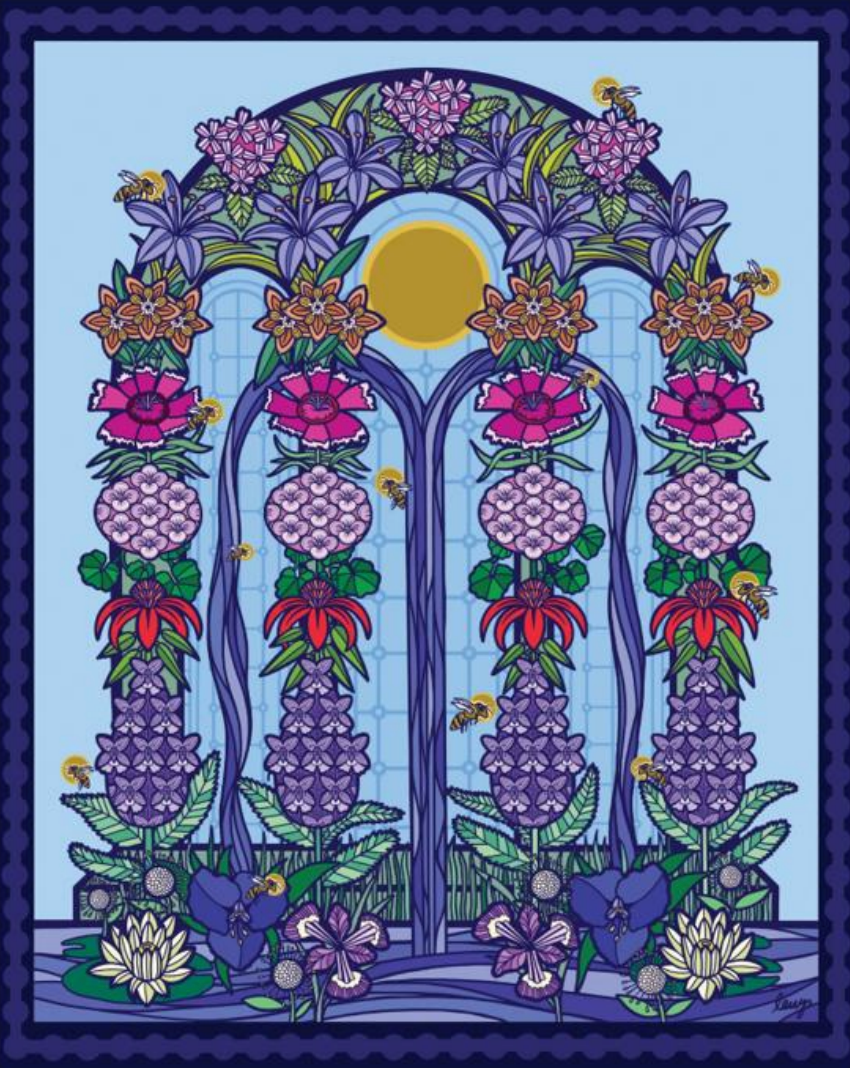
Luke recorded the acts of these apostles, careful to describe how to find freedom while confined. It’s illustrated on your bulletin cover, [3] and reminds me of the old hymn that goes, “Sometimes a light surprises the child of God who sings.” [4]
During the recent No Kings weekend, I was part of the human banner at Ocean Beach. Now, that cold
morning, I showed up a bit jaded. We’re not gonna stop fascism this way. We can’t save democracy with a good drone shot. But as I found my place in the common purpose, I perceived how the dread that had brought us together — over the demise of decency and honor — melted into joy. Five-thousand strangers on a foggy Saturday morning, discovering the power of non-violent protest. Standing in solidarity.
A woman behind me began to sing “God Bless America”. Then, someone else sang “This Land Is Your
Land”. Something bigger than us took over from there. What do you call that sweep of energy that
transforms and unites a group of strangers? Freedom? Hope? Salvation?
Salvation.
The jailer asks, what must I do to be saved. Two-thousand years ago, the Early Church made
salvation simple. Salvation: humans gathered together with the Holy Spirit.
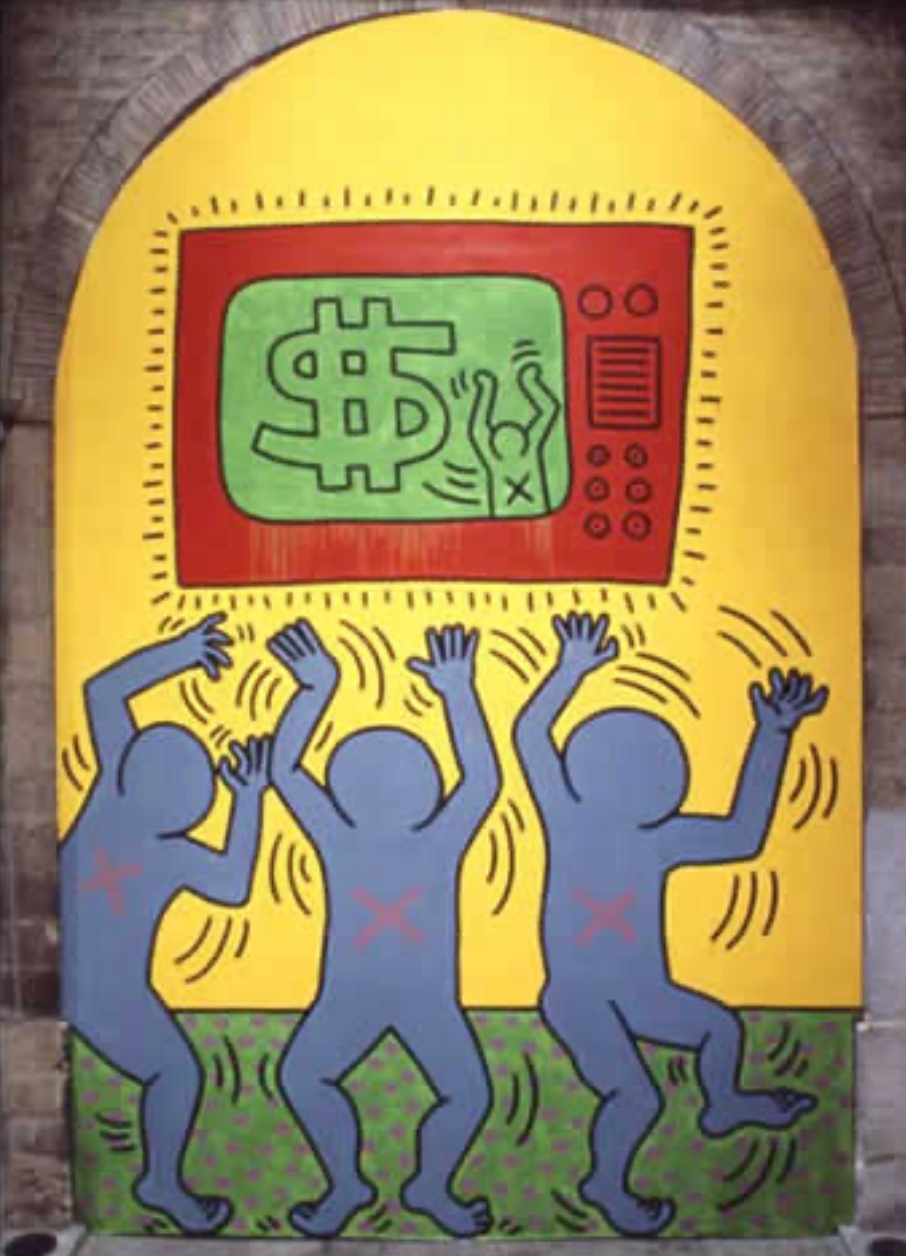
[5] To gather together for the purpose of Jesus Christ. This isn’t the personal, selfish kind of salvation preached on TV today. It does not reward us with wealth and private jets. It is not based in fear, hell fire, or damnation. Old -time salvation leaned he avily on solidarity, and expected God to join in. We come together amidst chaos and distraction because the Bible makes plain that since the beginning: Chaos is where the Holy Spirit does her best work.
Salvation’s Song.
No empire can confiscate a song forged in chaos, a truth-song that responds to disinformation, a song that offers corrective tension to hate, a song that has learned from loss, a song of resilience after of losing a job, upon opening another rejection lett er, a song in defiance of the inconclusive test result, a song to drown out the anxiety over what could be next —this is where God waits for us.
This week, a podcast production team led by my friend, Lynne Gerber, won —is everyone sitting down? —a Peabody Award! If you want to hear an people singing their salvation, listen to her podcast: When We All Get to Heaven,
[6] the story of AIDS devastating the Metropolitan Community Church of San Francisco, my former congregation, and how the people experienced resurrection through solidarity. Salvation through song.
Human Beings Are Not Commodities.
Paul and Silas encounter a nameless young woman. She is perceptive, able to predict what’s coming down the road. An ancient futurist. The men around her, including Luke our author, considered her possessed. Had she been a man, they would have called her a prophet. Her handlers trafficked her as a soothsayer, a Sybil. She was a commodity, merchandise, a human being used for their financial gain.
Paul and Silas did not go to jail for believing in Jesus, nor for healing this woman. They were arrested for disrupting the local economic system that relied on the diminishment of the other. The defenseless. The minority. The non-citizen.
Paul casts out the “spirit” that bound her, and he freed her from the men who prostituted her. The men were incensed, not because they cared about her but because they’d lost their revenue stream. The Philippi city officials didn’t care about her either. They arrested Paul and Silas for subverting a system through which some people profit from the exploitation of others.
That system has a long shelf life and goes by many names: empire, colonization, manifest destiny, unregulated capitalism. It is illustrated in the building of new detention centers around this country. But God is writing the song of the people who refuse to let the building go forward. [7] They say
they’re coming here for Alcatraz. [8]
Currently, our government is all earthquake and no song. All chaos and no love. Denying God. Denying the love of Christ. What is against God shall not stand!
The Jailer’s Salvation.
In the Roman Empire, a guard who lost his prisoners would also lose his life. But after the chains fell off and the doors swung open, the prisoners didn’t run. They stayed together.
Theologian Paul Tillich published a series of sermons called The Shaking of the Foundations, arguing that earthquakes don’t build anything. However, they do reveal the systems we have normalized. Paul and Silas urge us: do not normalize corruption. Stay, and sing, and meet a greater cause. Locate your hope. Sing of the Jesus who showed us how to suffer with and for one another. Help us convert the system and the system’s protectors.
The jailer fell down. What must I do to be saved? Paul and Silas did not demand a confession of sin nor that he renounce the devil or the system. They didn’t require a new members class. They just said: believe, change your mind, take the plunge, join us.
To know salvation is to realize our dependence on one another. To love our neighbors, and to love God. This is why we sing. There is room in the song for you.
That night, that ICE agent—I mean Philippian jailer—welcomed his prisoners into his home, his dinner table, and his family bathed the their bodies.
Join the Song.
Across this world right now, there is a midnight song rising from sick rooms and courtrooms, from boarded-up Social Security offices, from lines at the grocery store, from voter registration call centers, calling all people of goodwill to solidarity and mutual healing.
The deepest freedom is not the absence of chains but the presence of love that refuses to leave anyone behind.
We are all here, and we have a song to sing.
Amen.
[1] < https://allen-temple.org/about-us/ministerialleadershipandstaff/rev-dr-j-alfred-smith-sr>
[2] For opera fans, there are striking comparisons to the prisoners’ chorus in Beethoven s Fidelio. See
<https://youtu.be/x5O1fBAnhvo?si=R6fsMW8wqfpbCdXY>
[3] "Paul & Silas in Prison” © Paul Oman Fine Art. All Rights Reserved.
[4] Hymn # 800 in our hymnal. Sometimes a light surprises the child of God who sings. / It is the Lord who rises with healing in his wings.
[5] This definition is from Early Church historian, Rita Nakashima Brock, whose book Saving Paradise is available in the church library.
[6] <https://www.heavenpodcast.org/ > When We All Get to Heaven is available through podcast streaming service.
[7] https://boltsmag.org/ice-warehouse-detention-facility-roxbury-new-jersey/
[8] Its a fight that is coming for Alcatraz. < alcatraz-into-prison/89426503007/> https://www.usatoday.com/story/news/california/2026/04/03/trump-asks-congress-for-152m-to-turn-