
How to Talk So Little Kids Will Listen

Alison Faison • January 27, 2022

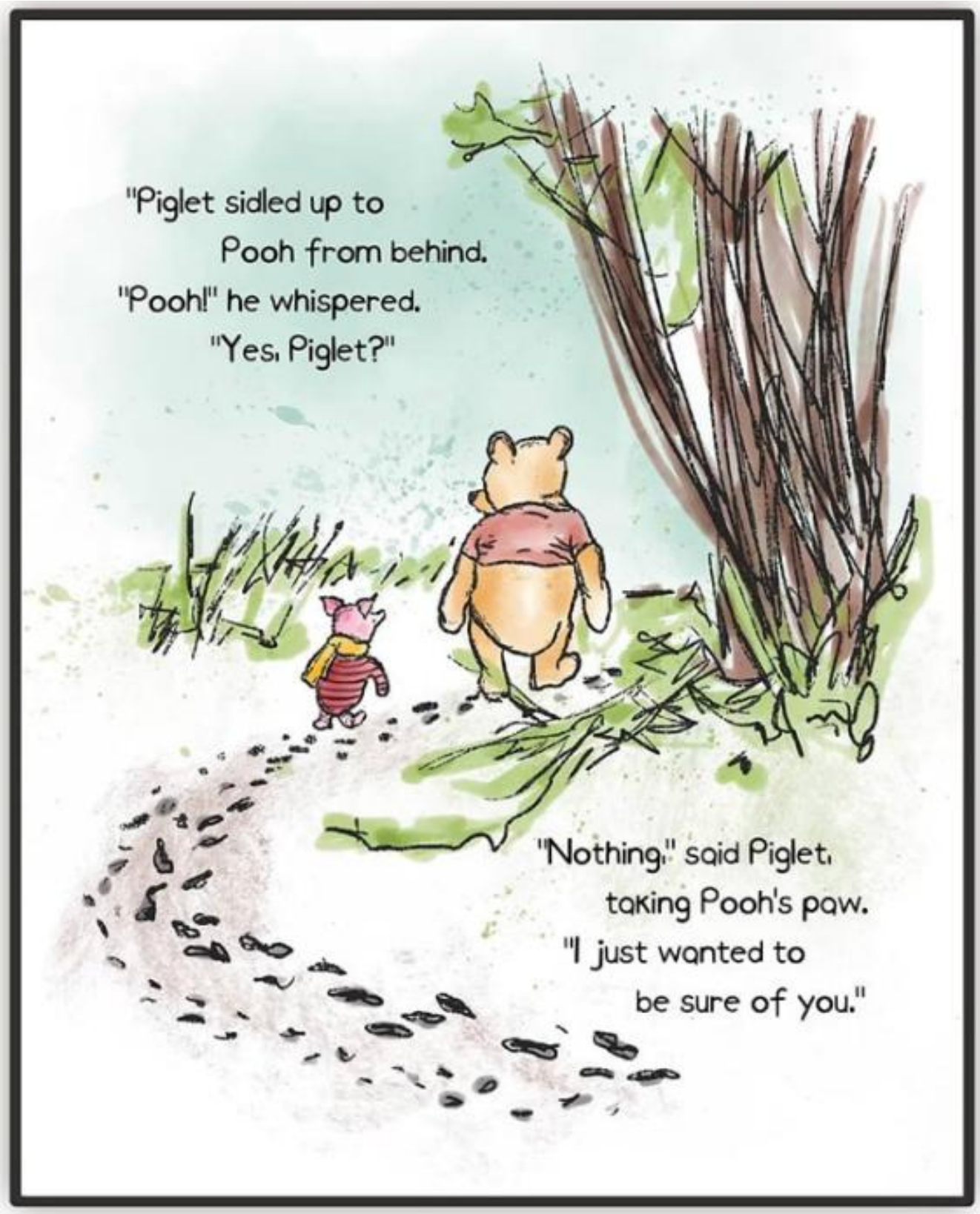
During my early childhood education classes, I learned about ages and stages of children, developmentally appropriate practices, and family-centered early care and education. The recommended 2017 book, How to Talk So Little Kids Will Listen: A Survival Guide to Life with Children Ages 2-7 by Joanna Faber and Julie King, offers many practical ways for adults to reword our observations and requests of children, so that they will actually hear us and then respond by taking independent or cooperative action. Encouraging children to become problem-solvers and learn a cooperative approach to conflict helps adults and children steer clear of ineffective punishments, as well as conserve precious energy. Faber and King write, “There’s no telling what solution kids will come up with when a problem is put in their hands. When the solution is their own, it will usually work for them. And when you have multiple kids, you have multiple problem-solvers instead of just multiple problems. The larger message is: When there is conflict between us, we don’t need to put our energy into fighting each other. We can combine forces to search for a solution that respects the needs of all parties. The child is an active participant in solving his problems.” (page 127) Adults can also learn to be problem-solvers in ways that differ from some familiar, but unhealthy modes picked up in family of origin settings or in stressed and fear-based communities.

When we model faith-formation behavior for our children, we are showing them non-violent ways to problem solve, help ourselves, and help others. Jesus did not perform miracles to helpless people as an end it itself, he gave them powerful tools to navigate their challenging and judgmental surroundings to nurture a more open-minded framework for including others and accepting oneself with empathy. We make mistakes. Sometimes punishment seems like a quicker, easier way to stop a certain behavior. “Punishment has a short shelf life. Little kids grow quickly. It’s physically difficult to punish a child who is larger and stronger than you are. As children become more independent it becomes harder to enforce punishments. How do you ground a teenager or take away his screen privileges without becoming a prisoner of your own punishment?” (p. 128)

In the book, there are many anecdotal stories of adults and children working things out. There are also examples of ways to rephrase words so the message is not condemning or dismissive. For example, Let’s say your child is going to get their vaccine. #1 Acknowledge Feelings “Instead of, ‘Come on, it’s not that bad. Just let her do it, and it’ll be over.’ Try, ‘It can be scary to think about someone sticking a needle in your arm.’ Instead of, ‘Don’t cry. You’re a big boy. Try, ‘That hurt! You didn’t like that!'” #2 Offer in Fantasy What You Can’t Give in Reality “I wish they could put the medicine inside a lollipop. You’d eat one a day for a week and then you’d never get sick.” #3 Offer a Choice, #4 Give Information (p. 310)

This book will be in the Calvary Library in the Parenting section. The library is next to the chapel and the lounge. Check it out the next time you are waiting for worship to start or after you have picked up your children from Sunday Studio.

Saturated in Spirit (Acts 2:17) - 2020 Lauren Wright Pittman
By Rev. Victor Floyd May 24, 2026
God listens to our prayers. Our words? Not so much. God knows what's in our hearts, despite the words we choose. What if we, like the Holy Spirit, were to listen to what's underneath the noise? Perhaps then we could discover true common ground.
A large spacious sky, purple and pink, with the word EMPTY across it
By Rev. Marci Glass May 17, 2026
Our passage from the Letter to the Philippians contains what is called the Christ Hymn. Perhaps they used it in worship. It is very poetic language about who Jesus was. Jesus is described in this hymn as someone who 'emptied himself'.
By Rev. Marci Glass May 13, 2026
The apostle Paul experienced hardships for his preaching. He was imprisoned, kicked out of towns, and suffered harm. He was willing to talk about his struggles, but he never stopped there. It can be easy to see our struggles as the conclusion of a story. It can be more challenging to see them as a part of a bigger story. In Paul's letter to the Philippians, Paul reminds us to look for the bigger thread that weaves our stories together, and, in the midst of his suffering, he makes the decision to rejoice.
A vast purple mountain range covered in fog at dusk. The sun is setting a bright gold sunset behind.
By Guest Preacher Rev. Dr. Victor Aloyo May 3, 2026
In a city crowded with idols and an altar dedicated to an unknown god, the Apostle Paul discovered that humanity's deepest restlessness is itself a longing for the One in whom we live, move, and have our being.
A colorful scene of Paul & Silas' prison encounter - © Paul Oman Fine Art
By Rev. Victor Floyd April 26, 2026
When the earthquake opens every door and every chain falls loose, Paul and Silas don’t run. That inexplicable refusal — we are all here — is what converts a jailer, and what might yet convert us.
Restored (The Conversion of Saul), Lisle Gwynn Garrity ] © A Sanctified Art
By Rev. Marci Glass April 19, 2026
Paul’s conversion is one of the most dramatic stories in scripture. But if you had told 20 year old Paul that 2000 years later we would know him as the most prolific writer about Jesus, he would not have believed it. What a second act! Do we give people space to live their second acts?
3 boys in Bible study writing down something on a piece of paper - the text reads ‘doubting as faith
By Rev. Joann Lee April 12, 2026
On this Confirmation Sunday, we read about Thomas, the disciple who doubted and would not believe until he saw Jesus with his own eyes. He is usually viewed negatively, but certainity is the very opposite of faith. Without our doubts, how can we profess to have faith?
A bunch of wildflowers in dusk lighting, the text reads ‘while it was still dark’
By Rev. Marci Glass April 5, 2026
Mary went to the tomb on Easter morning while it was still dark. She encountered the living Christ not after day had dawned, not when things were looking hopeful, but while it was still dark. What might the Easter story have to say to our world today? Where is resurrection in our midst?
A palm leaf with text that says ‘enough is enough’
By Rev. Marci Glass March 29, 2026
What we get before Palm Sunday in John’s gospel is the story of people who are ALL IN, saying enough is enough if a culture of violence wants to keep people in their graves. Enough is enough if generosity and abundance are scorned. Enough is enough if talking about new life is threatening to people in power . They lead
Ecco Homo by Caravaggio, c 1605. Jesus on trial
By Rev. Marci Glass March 22, 2026
In this passage from John's gospel, we're reminded that while the occupying Roman government murdered Jesus, they did so with the encouragement of Jesus' own people. What does this story have to say for how we live together, how we acknowledge our mistakes, and how we are called to be faithful today?
More Posts