
Sermon 12.14.2025: Finding Joy in the Mess of Life
God chose an unwed teenage girl to bear the son of God.
It reminds us that God is willing to be vulnerable. Because Mary was vulnerable. There was a more than decent chance that this pregnancy could have resulted in Mary being stoned to death. God does not just have a preference for the poor and the weak. God became poor and weak. God came to earth and joined a family, entering into the struggles, the fears, the anxieties, the joys, the celebrations, and the gifts that go along with being family.
Advent 2025: Soon and Very Soon
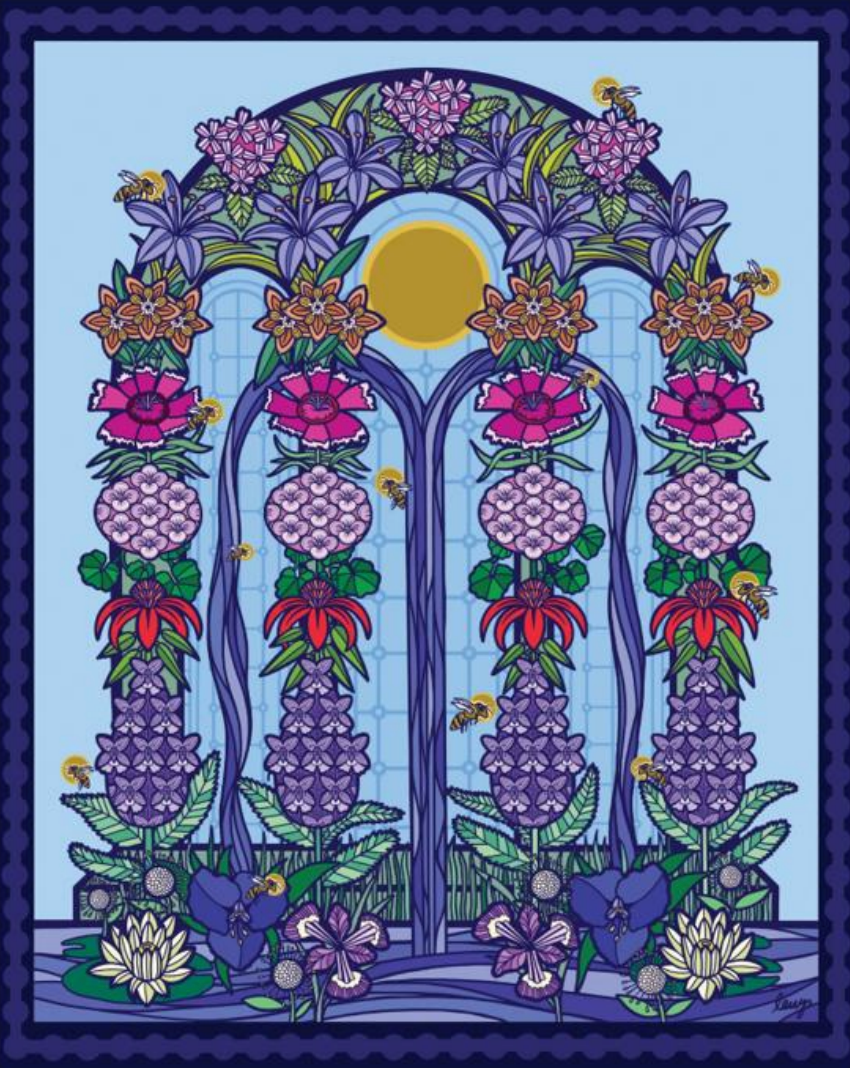
This Advent, we acknowledge our need for radical hope. The scriptures from this season encourage us to prepare for God's best, yet it sometimes feels like we are living in the “worst of times.” Can we hold fast to the promise that “soon and very soon” we are going to see the hope, peace, joy, and love of God manifest in our lives and int the world? Soon and very soon, friends, soon and very soon. This Advent, we wait with hope.
Scripture
Luke 1:46b-55
"My soul magnifies the Lord,
and my spirit rejoices in God my Savior,
for he has looked with favor on the lowly state of his servant. Surely, from now on all generations will call me blessed, for the Mighty One has done great things for me, and holy is his name;
indeed, his mercy is for those who fear him from generation to generation.
He has shown strength with his arm; he has scattered the proud in the imagination of their hearts.
He has brought down the powerful from their thrones and lifted up the lowly;
he has filled the hungry with good things and sent the rich away empty.
He has come to the aid of his child Israel, in remembrance of his mercy,
according to the promise he made to our ancestors, to Abraham and to his descendants forever."
Isaiah 35:1-10
The wilderness and the dry land shall be glad,
the desert shall rejoice and blossom;
like the crocus it shall blossom abundantly,
and rejoice with joy and singing.
The glory of Lebanon shall be given to it,
the majesty of Carmel and Sharon.
They shall see the glory of the Lord,
the majesty of our God.
Strengthen the weak hands,
and make firm the feeble knees.
Say to those who are of a fearful heart,
‘Be strong, do not fear!
Here is your God.
He will come with vengeance,
with terrible recompense.
He will come and save you.’
Then the eyes of the blind shall be opened,
and the ears of the deaf unstopped;
then the lame shall leap like a deer,
and the tongue of the speechless sing for joy.
For waters shall break forth in the wilderness,
and streams in the desert;
the burning sand shall become a pool,
and the thirsty ground springs of water;
the haunt of jackals shall become a swamp,*
the grass shall become reeds and rushes.
A highway shall be there,
and it shall be called the Holy Way;
the unclean shall not travel on it,*
but it shall be for God’s people;*
no traveller, not even fools, shall go astray.
No lion shall be there,
nor shall any ravenous beast come up on it;
they shall not be found there,
but the redeemed shall walk there.
And the ransomed of the Lord shall return,
and come to Zion with singing;
everlasting joy shall be upon their heads;
they shall obtain joy and gladness,
and sorrow and sighing shall flee away.
Sermon
One of my favorite images of joy is an outtake from a family’s Christmas card photo shoot. Three children are dressed up in their holiday finery, sitting next to each other, and each holding a letter. J O Y. But if you’ve ever done a photo shoot with young children, you might not be surprised when I tell you the three kids are all crying.
I love the word joy. It is different than happiness. Happiness is good, and worth pursuing, but is most often a response or reaction to something external. We laugh at a funny story a friend shares. We enjoy a good meal and feel happy.
Joy is not dependent on external circumstances. Joy emerges from inside, and is an overflowing of your meaning, your purpose, your contentment.
Happiness triggers a dopamine response in your brain. Joy shows up in a different part of your brain. Joy lights up the brain in areas associated with:
Meaning-making and purpose
Spiritual and transcendent experiences
Long-term wellbeing and contentment
Emotional regulation and resilience
And one other difference between joy and happiness is that only joy can co-exist with difficulty. Happiness fades when the external circumstances change. Joy comes from within.
CS Lewis describes joy this way. “Joy is distinct… from pleasure. It must have the stab, the pang, the
inconsolable longing.”
The photo of the crying children holding the word JOY is a perfect image for joy.
And friends, we need to work our joy muscles these days. Not to pretend everything is fine, but so we can keep rooted to the things that matter, no matter what terrible things the world is doing.
And the news was grim again this week. A shooting in Australia yesterday targeted a Jewish community celebrating Hanukkah. Antisemitism has no place in our world, and yet it takes up too much space. How can this be?
College students at Brown University were killed and injured yesterday when someone opened fire in a
classroom as they were studying for finals. Gun violence has no place in our world, and yet it takes up too much space. How can this be?
ICE continues to target people based on the color of their skin, arresting citizens, pepper spraying unarmed crowds, and in Boston, they pulled people out of line to become US citizens. These people had done all the work and were preparing to swear oaths of allegiance to our country, with no criminal history, when they were sent away. This level of hatred and racism has no place in our world, and yet it takes up too much space. How can this be?
The news has been grim but yet, here we are, despite our questions, with our questions, to proclaim joy and not despair.
Because despair is just a stop on the journey, a place where you pull over, look back at what has been lost, and then prepare to journey again, into this new world that will be different than the one we knew before. And it is moments like these when I am especially thankful that I am not on the journey alone. Thankful for this chance to come together and pray, and sing, and be in community together.
Mary didn’t want to be alone either. Mary, in all likelihood, was still a teenager. Girls married very young at a time when the life expectancy was 40.
Unplanned, unwed teenage pregnancies, as difficult as they are today, would have been more than
devastating for Mary in her culture.
And, quite frankly, it doesn’t matter that the pregnancy is God’s—because while the angel told her that she was blessed and that she shouldn’t be afraid, the angel did not take out an ad in the Jerusalem Times to make sure that everyone else knew that.
”How can this be?”, she asks the angel.
How can this be, indeed.
I can only imagine what was going through her head when the angel showed up. “Greetings, favored
one!”
”Who? Me? Favored by whom?”
Can’t you just see Mary looking around, trying to figure out to whom the angel would be speaking in this dusty town of Nazareth.
Favored one? I don’t know how many years it has been since you were a teenage girl or might have known many teenage girls, but I suspect that “favored one” is not how they often see themselves.
What are the implications for us if God chose an unwed teenage girl to bear the son of God?
One that occurs to me is that here is our proof that God is willing to be vulnerable. Because Mary was
vulnerable. There was a more than decent chance that this pregnancy could have resulted in Mary being stoned to death. God does not just have a preference for the poor and the weak. God became poor and weak.
God came to earth and joined a family, entering into the struggles, the fears, the anxieties, the joys, the
dangers, the celebrations, and the gifts that go along with being family.
And things will not go smoothly for the Holy Family either. I hate to give away the story, but according to Matthew’s gospel, King Herod finds out a child is born who is to be the King of the Jews. And Herod decides another king running around town would be destabilizing to his political dynasty. So, he seeks to kill the baby Jesus.
But the family flees to Egypt as refugees, and they were gone when ICE, I mean Herod comes looking.
Herod, in a rage, killed every male child under the age of 2 he could find. We’ll hear that story in worship after Christmas.
The Holy family knew all about the violence of the world.
If you’re wondering where God is in the midst of these tragedies that are sadly too common in our world, remember God chose to become a child, who would be at risk to the dangers of this world. How can this be?
God is not removed from such tragedy, but is in the midst of the dangers of life. So, when pundits and tv preachers try to say that these things happen because we supposedly kicked God out of our public schools, or let trans kids play volleyball, or other such nonsense, remember the incarnation.
Remember that God chose to become one of us. I’ve said it before, but until these people on TV who claim to speak for Jesus start listening to me, it appears I have to say it again.
The God who chose to become flesh and dwell among us is always standing with the vulnerable and is never celebrating the cruel.
But Mary doesn’t quite know where this journey will take her. All she knows is life will not be the same after this news from the angel.
Remember the line from the poem at the start of worship? When the angel said:
For the space
of a breath
I paused,
unwilling to disturb
her last ordinary moment,
knowing that the next step
would cleave her life,
that this day
would slice her story
in two,
dividing all the days before
from all the ones
to come.
Mary pauses for a moment on the journey, to look back and realize her childhood is gone, the world of
Seventeen Magazine, being on the cross-country team, and going to dances at the high school is behind her now.
And before the angel leaves, she asks him a question. How can this be?
The angel said to her, ‘The Holy Spirit will come upon you, and the power of the Most High will overshadow you; therefore the child to be born* will be holy; he will be called Son of God. 36 And now, your relative Elizabeth in her old age has also conceived a son; and this is the sixth month for her who was said to be barren. 37 For nothing will be impossible with God. 38 Then Mary said, Here am I, the servant of the Lord; let it be with me according to your word. Then the angel departed from her.
Other people in scripture talk back to angels. Sarah laughs when an angel tells her she’ll give birth in her old age. Moses tells the voice in the burning bush why it has chosen the wrong person to lead God’s people. Zechariah, John the Baptist’s father, asks for proof and is silenced for nine months. I think Mary is the one person in scripture where the angel takes the question at face value and doesn’t get annoyed. She gets an honest answer.
God takes Mary seriously. In her selection as the mother of Jesus. In her questions. In her assent. God doesn’t choose Mary because she’s young and won’t talk back and ask questions. God chooses Mary because God knows she will ask the right questions.
How can this be?
Reverend Ginger Gaines-Cirelli [1] says this about Mary:
What strikes me is how radical it is that Luke centers the agency of a young woman. Not her virtue. Not merely her purity. Her AGENCY—her capacity to interpret, to question, to consent, to partner with God in the redemption of the world. Luke makes it clear: God honors Mary's mind. God honors Mary's questions. God honors Mary’s agency. And God waits for her consent.
And here’s where it becomes necessary—and pastoral—to name something. We are living in a time when many cultural and religious voices are doing the opposite. Some movements—newly energized, others as old as patriarchy itself—insist women should be silent, subordinate, “covered,” restricted, or excluded from leadership.
Some churches teach girls that obedience is more important than wisdom, that submission is holier than selfhood, that a woman’s voice should be quiet even when the Spirit is speaking through her. And double or triple all of that if the woman is Black, brown, or trans.
But the Gospel does not support the shrinking of women’s humanity.
Luke tells us that a young woman interprets God s revelation more ably than a priest. Luke tells us that God entrusts the incarnation to a woman fully capable of discernment. Luke tells us that the salvation of the world depends on a woman who speaks, questions, evaluates, consents—and then leads the way.
It is in this context that we get Mary’s song, the Magnificat, which is Latin for “magnify”, as in the beginning of her song. “My soul magnifies the Lord…”
This song of Mary reminds us of other songs by other women in scripture. Hannah at the temple after the birth of Samuel. Miriam after the defeat of the Egyptians at the Red Sea. The song begins with praise for blessings received. Even in the midst of an unplanned pregnancy, Mary searches for her blessings.
But she doesn’t stop there.
She goes on to make claims about God. And the claims she makes suggests she realizes there are
implications for more than just her when God comes to earth as the child of a teenage girl from Nazareth. “God has brought down the powerful from their thrones, and lifted up the lowly; God has filled the hungry with good things and sent the rich away empty.”
And as far as we can tell, in either the text or in our world, Mary is speaking of things that haven’t quite
happened yet. Powerful people still seem to be on their thrones. The lowly still seem to be low. The hungry are still going to the food banks and, the rich are not quite empty.
As Christians, we are a people of hope. Hope that the promises God made to Israel have been fulfilled in
Christ’s birth and will be fulfilled in Christ’s return.
So, we live in hope that our work together as God’s people will make Mary’s song true for the people in our community, for the families afraid of our lawless immigration policies, for the hungry people worried about cuts to food programs.
Mary’s magnificat is like the passage we heard from the prophet Isaiah, which suggests that Mary knew her scriptures, that she understood the complicated way God works in the world.
Isaiah says,
Then the eyes of the blind shall be opened,
and the ears of the deaf unstopped;
then the lame shall leap like a deer,
and the tongue of the speechless sing for joy.
Like Isaiah, Mary understands that we must proclaim the world we want to live in before we have lived in it. We must point people to something beyond the despair we see on the news. Because the King Herods of the world want us to give up, to think it is all too much and there is nothing we can do. They want us to see their hatred and violence as signs of strength and not recognize it as proof of their weakness and fear.
Mary’s magnificat posed no actual threat to Herod. She wasn’t a member of congress who could
investigate his corruption. She wasn’t a billionaire donor to his campaign who could stop funding his cruelty. And yet, her song was a real threat to him, dangerous enough for Herod to murder all the children he could find who might grow up one day to become the king of the Jews.
Because the magnificat calls people back to the holy purpose of imagination, of remembering a world we haven’t yet fully inhabited but one we know is possible. And nothing is more dangerous to tyrants than our imagination and hope. Nothing upends them more than our joy in the face of their cruelty.
I love this line from the magnificat: God has scattered the proud in the imagination of their hearts.
That’s what joy does. Joy scatters the proud in the imagination of their hearts. Joy comforts and inspires the weak, sparking the imagination of their hearts too.
And that joy wells up in our souls when we remember that the pain and sorrow in this world do not have to control our imaginations. The joy that welled up in Mary, in the midst of the uncertainties of her journey, allowed her to imagine a magnificent song.
This is joy Sunday, the day of Advent we remind each other of this truth. God is present with us. God is being born for us again, a babe in a manger.
There is joy in the world because of this. The light shines in the darkness, and the darkness has not overcome it.
We, as God’s children, have the gift and responsibility of making JOY, complete with its longing, incarnate to the world around us. In the midst of our busy preparations for Christmas, may we pause to be on the lookout for the presence of wonder, that we may imagine the world Mary sings of in her song.
[1] https://www.facebook.com/ginger.gainescirelli/posts/pfbid02XAu8LcQ9GZtg2