
Sermon 08.23.2026: What a Friend We Have in Jesus
It may be aged and worn, but the old hymn "What a Friend We Have in Jesus" has a story to tell! More than a sweet Sunday School song, this chestnut is planted in biblical narratives and calls us into an intimate theology of abiding love.
Scripture
John 15:10-17
As the Father has loved me, so I have loved you; abide in my love. If you keep my commandments, you will abide in my love, just as I have kept my Father’s commandments and abide in his love. I have said these things to you so that my joy may be in you and that your joy may be complete. This is my commandment, that you love one another as I have loved you. No one has greater love than this, to lay down one’s life for one’s friends. You are my friends if you do what I command you. I do not call you servants any longer, because the servant does not know what the master is doing, but I have called you friends, because I have made known to you everything that I have heard from my Father. You did not choose me, but I chose you. And I appointed you to go and bear fruit, fruit that will last, so that the Father will give you whatever you ask in my name. I am giving you these commands so that you may love one another.
Sermon
Provenance of Hymn 465.
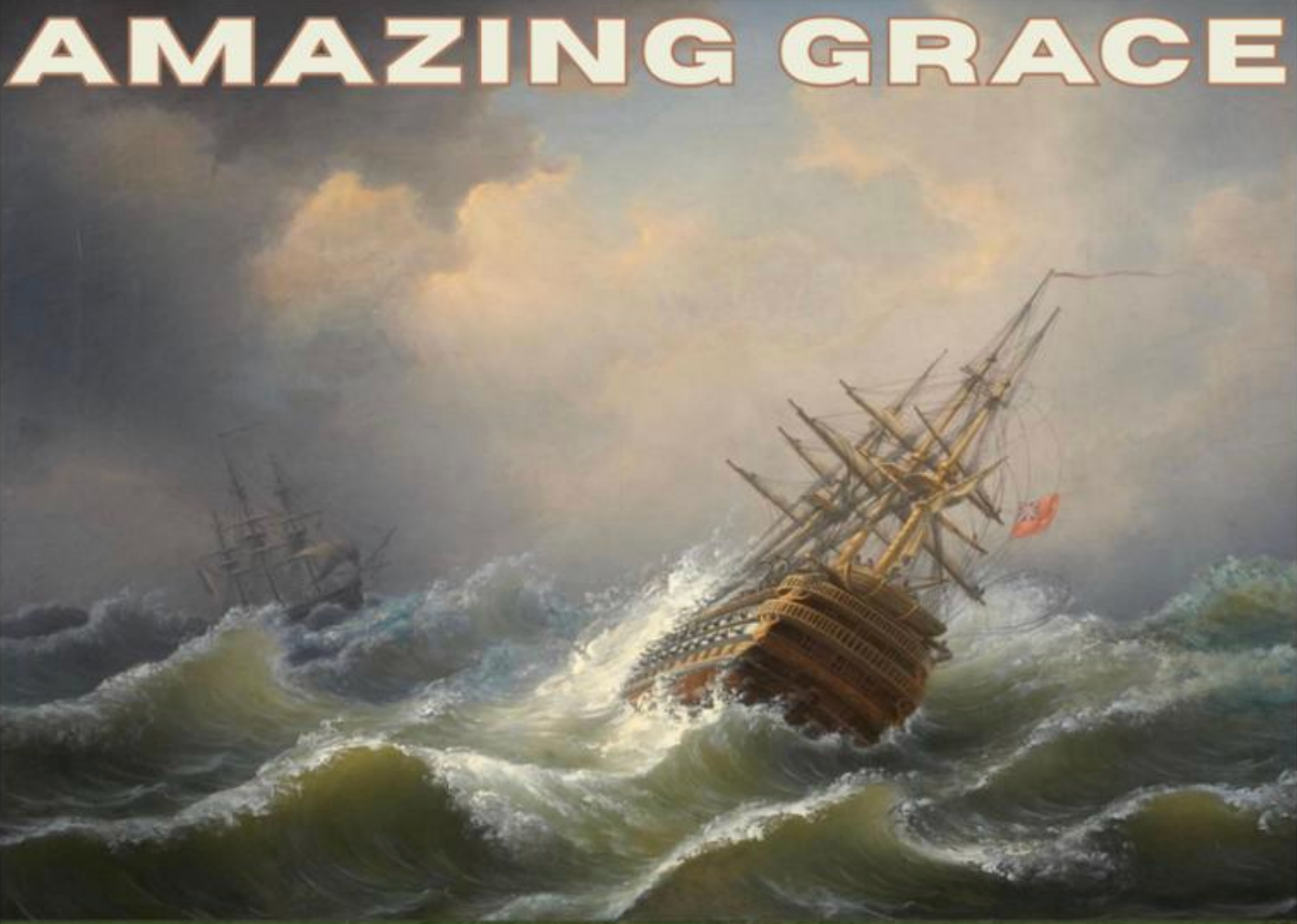
Every hymn has a story: where it’s from, who has influenced it, how it made it this far. I like to make friends with hymns, get to know them. Let them into my spirit. I have to admit that Joanne Whitt’s sermon last week [5] on "Amazing Grace" got me. I left with a new relationship with that old friend of a hymn. How can that happen after knowing it all my life? Question. Has anyone here ever left church humming a sermon? No! We take the hymns with us into the week, into the world. And if we really know some hymns, they will stay with us. They can even show up during life's most difficult situation. Our hymns become our theology.
Do you see the story at the bottom of the hymn 465? [6] Well, that Ian't the half of it. In 1845, Joseph Scriven was engaged to be married. He was 25 years old. Optimistic and in love. But the night before the wedding, his fiancee drowned. Instead of a celebratory honeymoon, the 25-year-old Scriven sailed away from Ireland, emigrating to Canada, alone. Now, here we are ten years later, in 1855. Word comes that his mother, still in Ireland, is gravely ill. Since he can't get to her, he sends her this poem instead.
Joseph Scriven never intended for this poem to become a hymn or for it to be sung in worship. “What a Friend We Have in Jesus” was a son’s gift to his dying mother. Its personal nature is what draws us in. A few years later, more grief came for him. Scriven was engaged to a woman named Eliza. But. In August of 1860, just before their wedding, she died of pneumonia.
He lived another twenty-six years, carrying the weight of those three tragedies and surely others. Life’s disappointments weighed on him. In 1886, Scriven was staying with a friend and confided in him,“I wish the Lord would take me home.” Several days later, his body was found at a nearby mill. Whether his death was suicide and accident we will never know. But, it could be that the one who wrote of the friend we have in Jesus died thinking he had nothing to live for. So, regarding the friendship of Jesus, is this hymn a great failure or a great argument? As someone who is also well-acquainted with grief, I am here to tell you, it's the argument. Our friends and families are worth living for. You are worth living for. God has a future for you no matter the bleakness of the current situation. And honestly, the idea that we should give up on this world—that we are alone and hopeless—is a well-crafted lie. (And who, Sister Tosca Lee, [7] is a liar? The devil is a liar! That's who.)
Scripture.
In John 15, Jesus transforms the language of relationship so that we may feel it in our bodies, and be prepared, like him, for the trouble ahead. There’s always trouble ahead. John 15’s precious theology goes like this. "No longer do I call you servants," Jesus says, "I have called you friends." This changes everything! Now, for clarification, this is not a call to believe in Boyfriend Jesus, or Prosperity Gospel Jesus, or my Personal Jesus, or the new kind of Jesus who tells me I am brilliant and always on the right track: Chatbot Jesus. The Real Jesus calls us into a divine friendship, even more meaningful than Claude.
Servants no longer. Servants are expected to obey, but friends know why we should heed what we learn from one another. “You did not choose me, I chose you." Jesus doesn’t depend on us reaching out and inviting him in. His friendship is already on offer, sitting on the table. “This is my commandment, that you love one another as I have loved you.” Jesus deputizes his followers into beloved community, what Dr. King called the “inescapable network of mutuality,” “the single garment of our destiny.” Our shared destiny. “There is no greater love than this, to lay down one’s life for one’s friends.” Jesus’ friendship is the opposite of I got mine, now you go get yours, the opposite of rugged individualism, the opposite of going it alone.
The Lie of Hopelessness.
Hannah Arendt [8] was a Jewish refugee from Nazi Germany. She has a complicated life story, but there is no doubt of her brilliance. She studied the effects of going it alone, how isolation changes individuals and whole nations. In her 1951 book, The Origins of Totalitarianism, she teaches us three useful terms we would do well to keep in mind these days.
1. Solitude, she writes, is being alone and in conversation with yourself — what Socrates called the two-in-one. Solitude is desirable. (Only children, unite!) We are never lonely in solitude. Solitude presumes a self you can still talk to, and, this preacher would add, the desire to uncover our True Self. [9]
2. Isolation is different. It's what happens when we are cut off from the public square — from acting together with others. Remember the pandemic’s first weeks, when people could be pulled over and asked where they were going? We were practicing a positive kind of isolation so that we didn’t infect one another. But isolation is also used for more political and nefarious goals. Hannah Arendt teaches that tyrants have always relied on isolation. They divide us to control us. Sound familiar? They isolate—demonize, scapegoat, shun—innocent, visible minorities. Current examples: Pete Hegseth demonizes trans service members and has even removed minority officers and women from positions of power. Stephen Miller demonizes non-white immigrants. So, if you can’t persuade the people with your ideas and plans for the future, the workaround to power and domination is isolation. It’s definitely immoral, but it works.
As bad as isolation is, says Hannah Arendt, it still leaves a person's private world intact. While isolated we still have families, friendships, our own company, and our chosen families, the best of friends. Then comes the secret ingredient used by dictatorships throughout history.
3. Loneliness. Loneliness is what happens when isolation seeps in everywhere. In loneliness, we lose the world and our True Selves at the same time. The inner conversation dries up. There’s an old Spiritual that goes, “I couldn’t hear nobody pray/ couldn’t hear nobody pray / Way down yonder by my self / and I could’t hear nobody pray.” [10]
The Lie’s Impact.
Loneliness is not a private misfortune that happens to a few unlucky people. It's often manufactured. The dopamine hit of the algorithm, the endless scrolling, the disinformation, the intentional distractions and the chaos—we are groomed to lose our True Selves.
When we lose our place in the web of relationship, we eventually grow desperate to belong to something—anything—even movements organized around cruelty. A monstrous belonging will seem better than no belonging at all.
Hannah Arendt describes mass-produced loneliness as the way of the Nazis, a method of recruitment, especially for you young men up in the balcony. You will soon receive offers to join ICE. I’m a 62-year-old out gay pastor with a chronic disease, and even I have been targeted with emails that ask me to apply to become a Border Patrol agent! It’s not just us young men, but every person here. We are and will be targeted by algorithms and propaganda and all the devil’s representatives. Their success depends on us feeling lonely and hopeless. Hopelessness is a well-oiled lie.
Friend of God.
Here’s the miracle of Jesus, when he calls us his friends. Jewish tradition reserves the title “friend” for exactly one person, and the Bible says it three times. Abraham is God’s foremost friend. [11] But in John 15, Jesus names all who follow his teachings his "friend" – a revolutionary dismissal of hierarchy and our big opportunity to walk through this world with a shield of protection that is quiet and holy.
In the 12th century, an English monk named Aelred of Rievaulx [12] wrote a treatise called Spiritual Friendship. [13] God was experienced by Aelred as friendship itself, as mutual trust and support, not as casual as worldly friendship but something holy, divine, that goes beyond Creator and Creation. Aelred named God "friendship." Following Aelred, I supposed could call the Trinity: God our Friendship, Christ our Friend, and the Holy Spirit our Befriending.
Teresa of Avila described prayer not as duty but as time spent alone with the One she knew loved her unconditionally, a friend. To her east, the Sufi mystics Rumi and Hafiz often called God "the Friend.”[14]
When Ananda suggested that admirable friendship might make up half of. the spiritual life, the Buddha corrected him saying, "No, friendship is all of spiritual life." The Quakers call themselves the meeting of Friends. “No longer do I call you servants,” The highest form of relationship with God is not submission. It is friendship. And it is the exact remedy, the rescue, for what Hannah Arendt spent her life explaining the absence of. Friendship saves you and me, and it could very well save the nation. Amen.
5 She preached that directly to me, somehow.
6 Our Glory to God Hymnal says: “This text was written by an Irish born immigrant to Canada to comfort his mother in Ireland when she was going through a time of special sorrow.”
7 Tosca Lee has changed the worshiping atmosphere at the once staid Calvary Presbyterian Church. She offers amens, verbalizes her faith, and commits her whole self to worship. We are better thanks to Tosca Lee. Although we are rightfully called the “frozen chosen” Ms. Lee has offered us a way to thaw out and, thus, discover more joy in Christ.
8 The Timothy Snyder of her time. < https://timothysnyder.org/on-tyranny>
9 “Awakening to Our True Self” by Fr. Richard Rohr, CAC. < https://cac.org/daily-meditations/awakening-to-our-true-self-2023-08-
10/>
10 Leontyne Price <https://youtu.be/EcCys2xRmwE?si=v2PtqhvQJZ_Qb6Jy>
11 2 Chronicles 20:7. Did you not, our God, drive out the inhabitants of this land before your people Israel, and give it forever to the descendants of Abraham your friend?; Isaiah 41:8. But you, Israel, my servant, Jacob, whom I have chosen, the offspring of Abraham, my friend.; James 2:23. Thus the scripture was fulfilled that says, "Abraham believed God, and it was reckoned to him as righteousness," and he was called the friend of God.
12 A juicy intro to Aelred. < https://en.wikipedia.org/wiki/Aelred_of_Rievaulx>
13 De spirituali amicitiâ
14 in Persian: Yaar