
Sermon 08.09.2026: Holy, Holy, Holy! Lord God Almighty
The hymns we sing in church have a theological and often biblical basis. “Holy, Holy, Holy,” one of the most familiar hymns to Presbyterians, takes language from Revelation. Revelation can be a confusing, difficult book, but the writer was responding to the crisis faced by first century Christians: Do we worship God, or the emperor? In 2026, we still have to choose.
Scripture
Revelation 4:1-11
After this I looked, and, behold, a door was opened in heaven: and the first voice which I heard was as it were of a trumpet talking with me; which said, Come up hither, and I will shew thee things which must be hereafter.
And immediately I was in the spirit: and, behold, a throne was set in heaven, and one sat on the throne.
And he that sat was to look upon like a jasper and a sardine stone: and there was a rainbow round about the throne, in sight like unto an emerald.
And round about the throne were four and twenty seats: and upon the seats I saw four and twenty elders sitting, clothed in white raiment; and they had on their heads crowns of gold.
And out of the throne proceeded lightnings and thunderings and voices: and there were seven lamps of fire burning before the throne, which are the seven Spirits of God.
And before the throne there was a sea of glass like unto crystal: and in the midst of the throne, and round about the throne, were four beasts full of eyes before and behind.
And the first beast was like a lion, and the second beast like a calf, and the third beast had a face as a man, and the fourth beast was like a flying eagle.
And the four beasts had each of them six wings about him; and they were full of eyes within: and they rest not day and night, saying, Holy, holy, holy, Lord God Almighty, which was, and is, and is to come.
And when those beasts give glory and honour and thanks to him that sat on the throne, who liveth for ever and ever,
The four and twenty elders fall down before him that sat on the throne, and worship him that liveth for ever and ever, and cast their crowns before the throne, saying,
Thou art worthy, O Lord, to receive glory and honour and power: for thou hast created all things, and for thy pleasure they are and were created.
Sermon
Certain sensations remind you vividly of your childhood. I lived in Stockton for the first eleven years of my life, so for me, those sensations include the taste of peaches. The smell of chlorine. Trying to see across the street through dense tule fog, which doesn’t seem to exist anymore. Impossibly hot pavement. And hearing our hymn for today, “Holy, Holy, Holy! Lord God Almighty!” It probably isn’t even close to true that we sang “Holy, Holy, Holy!” every Sunday at Lincoln Presbyterian Church, but it felt that way. We sang it from the green hymnal, the Presbyterian hymnal maybe 4 or 5 hymnals ago.
So I thought of “Holy, Holy, Holy!” as the most Presbyterian of all hymns, and its centrality, its importance is reflected by the fact that it is Hymn #1 in our hymnal. But it was written by an Anglican. That Anglican was Reginald Heber, born in 1783 into a privileged and educated family in Cheshire, England. He was something of a prodigy; he translated a Latin classic into English verse by the time he was 7 and entered Oxford at 17. After Oxford he became rector of his father’s church in a village in the west of England. There, he was something halfway between a parson and a squire, [ii] an English country gentleman. He loved his congregation, but he also had time to write. Which he did. He wrote 57 hymns. Heber was the first person to compile a hymnal ordering hymns around the church calendar – the church seasons like Advent, Christmas, Lent, and so on.
Heber abandoned the comfort and prestige of his life in the English village when he received a call to become the Bishop of Calcutta. He worked in India for three years, until the weather and his wide-ranging travel took its toll on his health, and he died of a stroke. His wife found “Holy! Holy! Holy!” among his writings after his death, and she passed it on to a noted musician, John Dykes, who composed and arranged the hymn for publication in 1861. [iii] Heber had written “Holy, Holy Holy!” for Trinity Sunday, and so Dykes named the tune “Nicaea,” because it was the first Council of Nicaea that formalized the doctrine of the Trinity in 325 A.D.iv Heber not only specifically speaks of the Trinity in the hymn – “God in three persons, blessed Trinity” – he uses the symbolism of three over and over again: God is “holy, merciful and mighty;” God is “perfect in power, in love and purity;” God is worshiped by saints, cherubim, and seraphim; and God is praised “in earth and sky and sea.”
Heber draws much of the imagery in the hymn from Revelation, chapter 4, our Scripture passage for today. Many people think of the book of Revelation as scary, and it does have some frightening images: four horsemen unleash destruction and calamity on the earth, mysterious numbers like 666 spell destruction; there are mutant locusts and multi-headed beasts and an end-times battle of Armageddon.[v] Earlier this morning, Victor suggested that our “Peace” question be, “What is your favorite beast in Revelation?”[vi] It’s that kind of book. It doesn’t help that what many people know about Revelation – or I should say, what they think they know – comes from the Left Behind series of novels, what one commentator calls, “Christian fiction on steroids.”
Or that Revelation has repeatedly provided raw material for self-appointed prophets to make predictions about future world events – none of which come to pass. [vii]
Revelation is certainly one of the most difficult books in the Bible; it is what’s called apocalyptic literature, and it’s full of strange symbolism. Barbara Rossing, author of a Presbyterian Women Bible study on Revelation, asserts that the most important thing for us to know about Revelation is that it is a message of hope. [viii] Revelation was written late in the first century A.D., during the last years of Emperor Domitian. The author of Revelation, John of Patmos, is a seer – a visionary. He sees the injustices and the tragedy of the Roman Empire: prosperity for some, violence and misery for many. There wasn’t systematic persecution of Christians yet, but just attempting to be a faithful Christian in the Roman Empire made your life hard. If you openly pledged allegiance to Christ over and against the emperor, you were economically and socially excluded from the larger community. Saying “no” to Rome’s emperor and empire was a daring, subversive claim.
So John of Patmos leads us through a series of visions. Visions are a standard feature of apocalyptic literature, which we might compare to science fiction today. There’s space and time travel; there are scenes of terrifying and life-changing power. John’s readers – his readers at the time – knew not to take these visions literally.[ix] What we’re intended to understand, to get, is that one after another, each vision in Revelation reminds us that God alone is worthy of our praise and allegiance. In the first three chapters, the visions take place on earth, and then, at the beginning of Chapter 4, which we read this morning, John is summoned to heaven.
The first vision in heaven is the heavenly throne room. God, we’re told, looks like jasper and carnelian, two semi-precious stones, and God is surrounded by an emerald-like a rainbow. I’m not sure these particular images connect with our twenty-first century imaginations; I have a hard time getting past the idea that this emerald-green rainbow is missing five of its six colors. The point of the vision is the majesty of God. A fun exercise might be to conjure up a wildly imaginative image of God that would appear majestic to us, that we’d find truly awe-inspiring in twenty-first century Northern California. Would God be sitting atop a redwood tree? Would the monstrous crashing waves at Mavericks [x] in Half Moon Bay bow down before God?
John pictures twenty-four elders casting their crowns before God. The line in “Holy, Holy, Holy” is, “casting down their golden crowns around the glassy sea.” This is meant to echo the throne room of the Roman emperor, where people sang songs of allegiance and spoke liturgies of praise. Petty kings, subjects of the emperor, would throw their crowns before him as a sign of his supremacy, a sign of their allegiance and worship. [xi] So John uses that image to remind us that only God, not the Emperor, is worthy of worship. “Only thou art Holy,” wrote Heber.
Heber also lived in an empire – the powerful and at that time, growing British Empire. India was part of that Empire. On the one hand, we see Heber leaving a life of comfort to minister to people in a foreign culture. On the other hand, from our perspective a couple of hundred years later, we know that in empire, the goals of religion and the goals of economic and political domination get mixed together. How much of that could Heber see? I don’t know.
What I do know is that Heber’s hymn and the book of Revelation remind us that worshiping God is subversive of empire. I’m going to say that again: worshiping God is subversive of empire. It is the antidote to empire and to all the powers that are at crossed purposes with God’s purposes. In response to the crisis faced by first century Christians, John tried to make the alternatives starkly clear: Do you worship the emperor, or do you worship God?
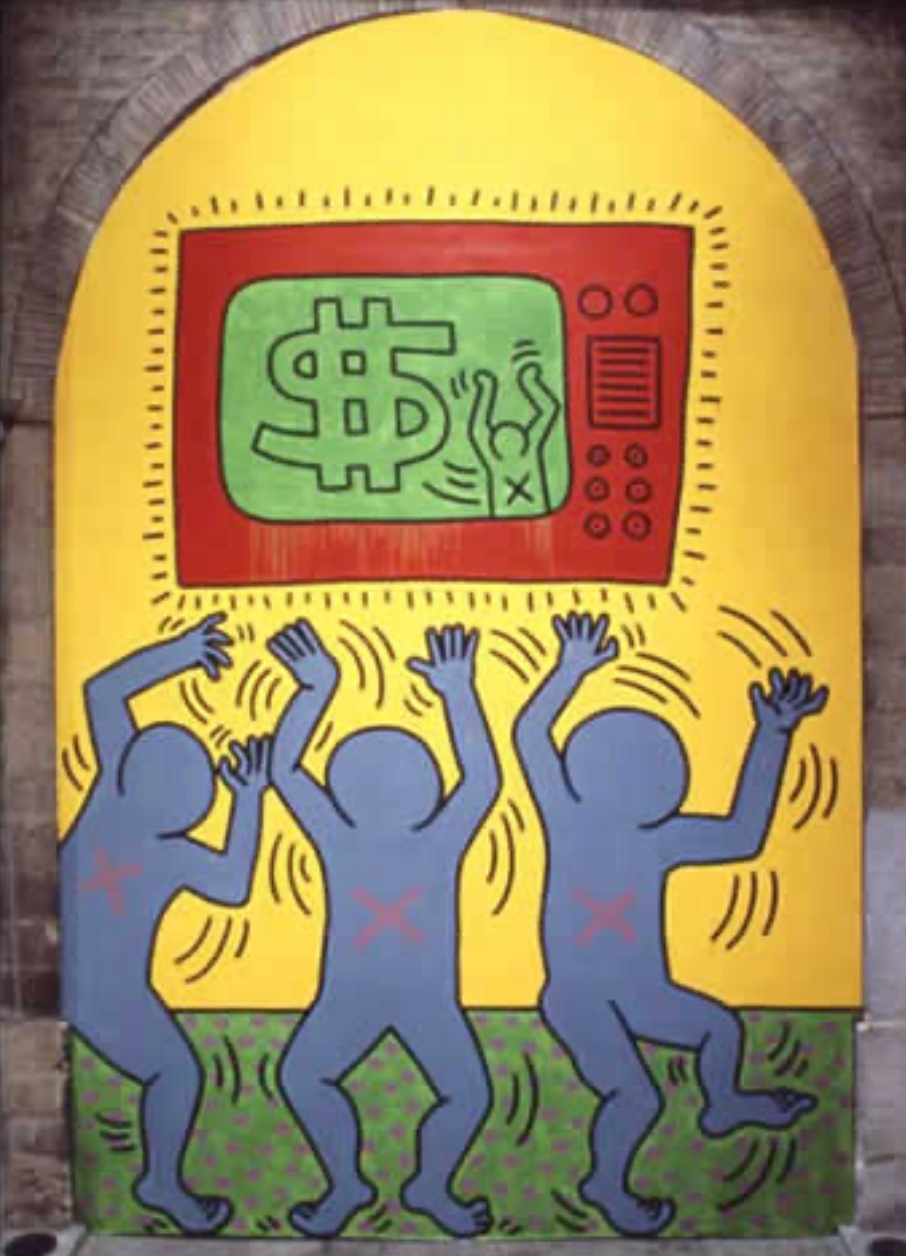
We still have to choose. [xii] We don’t live in the first century Roman Empire, or the 19th century British Empire, but imperial aspirations have been a part of much of U.S. history and are still alive today. The Scripture passage and the hymn raise these questions for us: What powers other than God are we at risk of worshiping today? To what powers do we give our ultimate allegiance? We can see obvious parallels to these concerns in what we’ve come to call Christian Nationalism, which conflates or rather subverts Christian values with a particularly xenophobic form of patriotism. But even if we aren’t Christian Nationalists, there are powers we might fall into worshiping: success, wealth, technology; our idols are everywhere.
The community that worships God is the alternative to empire [xiii] and to all the powers at crossed purposes with God’s purposes. I’m going to say that again, too: The community that worships God is the alternative to empire and to all the powers at crossed purposes with God’s purposes. The community set up by Jesus, a universal community of every nation, every language and every people, created by his witness of nonviolent love, forgiveness, gratitude, inclusion of the outcast, justice for the poor, and joy is a community that sings praise to God, not the emperor. It is a community that sings of its hope and trust that God’s will for all creation is peace, freedom, healing, well-being, shalom. Songs are a huge part of the book of Revelation; there’s lots of singing in the book. Maybe that’s because, as one commentator writes, songs “unbind people from their fear.”[xiv] We all remember Martin Luther King’s “I Have a Dream” speech from the 1963 March on Washington, but King came to the stage right after Mahalia Jackson, who sang, “I Been ‘Buked and I Been Scorned.” [xv] King later wrote to Jackson that after hearing her sing, “I couldn’t help preaching. Millions of people all over this country have said it was my greatest hour. I do not know, but if it was, you, more than any single person helped to make it so.” [xvi] Jackson’s song unbound him from his fear. Think of “We Shall Overcome,” and other Civil Rights era songs. Think of “Can You Hear the People Sing,” from the musical, “Les Misérables,” “Respect” by Aretha Franklin, “Born This Way” by Lady Gaga, “This Is Me” from “The Greatest Showman.” I’m sure you can think of your own list of songs that motivate you, inspire you, and even unbind you from your fear.
I’m guessing that when you woke up this morning and decided to go to church, you weren’t thinking that you were about to do something powerfully subversive. I’m guessing you weren’t thinking that by singing hymns today, by praying shoulder to shoulder with each other, by hearing God’s Word proclaimed, you were about to stand in opposition to the powers that strive to rule our hearts and minds, every day, everywhere: empire, consumerism, nationalism, racism, militarism, religious extremism, the destructive divisiveness in our political system. But you are.
And I never would have thought that one of the most traditional, most lofty, most Presbyterian of all the hymns in our hymnal – even though it was written by an Anglican – is in fact one of the most challenging, and even rebellious, but it is.
Holy, holy, holy! There is none beside thee! Who wert, and art, and ever more shall be! Amen, and amen.
© Joanne Whitt 2026 all rights reserved.
i S. T. Kimbrough, Jr.
ii John Julian, Dictionary of Hymnology (1907) http://www.hymnary.org/person/Heber_R.
iii http://www.faithclipart.com/guide/Christian-Music/hymns-the-songs-and-the-stories/holy,-holy,-holy,-lord-god-almighty-the-song-and-the-story.html .
iv http://en.wikipedia.org/wiki/Holy,_Holy,_Holy.
v Barbara R. Rossing, Journeys Through Revelation: Apocalyptic Hope for Today (Louisville, KY: Horizons, Presbyterian Women, Inc., PCUSA, 2010).
vi
Victor is the Rev. Victor Floyd, Calvary’s Minister of Congregational Care; the “Peace” question is a question that worshipers are invited to answer as they share the Peace of Christ with their neighbors in the pews. This morning’s Peace question was, “What is your favorite hymn?”
vii J. Nelson Kraybill, “Revelation Through the Centuries/Can I Get a Witness?” in The Christian Century, October 3, 2006, http://www.christiancentury.org/reviews/2006-10/revelation-through-centuriescan-i-get-witness.
viii
Rossing.
ix Rossing.
x If you’re not familiar with Mavericks, you can grasp a sense of the awesome power of the waves in this video: http://www.youtube.com/watch?v=CcioR3ElH60.
xi
Rossing; http://clarke.biblecommenter.com/revelation/4.htm.
xii Martha Greene, “Whitewash,” in The Christian Century, October 9-22, 2002.
xiii Pablo Richard, Apocalypse: A People’s Commentary on the Book of Revelation (Maryknoll, NY: Orbis Books, English translation, 1993).
xiv Rossing.
xv For a video clip of Mahalia Jackson singing “I Been ‘Buked and I Been Scorned” at the March on Washington: https://www.youtube.com/watch?v=FuQX33a9p44
xvi https://kinginstitute.stanford.edu/jackson-mahalia.