
Feeding Our Grief
“Cynecism is ungrieved grief.” I thought about this quote a lot after reading Traci Smith’s free Treasure Box Tuesday email. She, a children’s minister and author, quotes pastor and author, Rob Bell, who probably officiated many memorials and heard countless stories of grief from congregation members. In the past two months, I have attended three memorials for parents of my peers. All of the services were culturally different, but the grief was the same. We got together to breathe in stillness, hear music, observe the grieving family, eat a meal together, and connect with our own mortality. Ashes to ashes. I experienced three Ash Wednesdays after Easter. Civilian and urban folks world-wide have endured multiple brutal and unplanned Ash Wednesdays since Easter. San Francisco, Texas, Ukraine, Sudan.
Grief is not something that exclusively follows a memorial. It can be that tortuous feeling of rejection and loneliness when a close teen relationship changes. It can be the continuing sadness that wells up when the presence of a pet is gone. A young parent shared a post about his four-year old child’s openness about death. “Dada, I will love you even when we all are dead.” Her awareness of her grandmother’s death cemented the idea that all living beings will die. It seems that adults have a harder time facing that fact. I say that in light of so much unchecked adult careless behavior that continues to endanger other’s lives. Hubris ends in folly. Sounds Greek to me. Greek tragedy, that is.
People ask why bad things happen to good people. People of faith have a difficult time answering for God, even we know that They love and forgive us. Our solution to ease grief can be to sit with the grieving person or our grieving self and be present in the feelings. We church people like to provide meals or have potlucks to ease the grieving process. Most of us want to fix by offering a solution. I can think of times when I was cynical about a past event or series of interactions. My way of dealing with the grief was to repeat the story to myself and to friends. The feeling did not lessen until I did my own work of experiencing my feeling, having empathy for myself, and trying to negotiate a better circumstance. Eventually, I could move away from that story. Sometimes grief fades into the background. It does make a mark on us, and can show up at unexpected times. Lizzo offers such compassionate, honest, and physical response to grief in one of her latest songs. She goes into her grief, copes by connecting with people, music, and dance. She moves the grief energy.
“It’s been a minute, tell me how you’re healin’
‘Cause I’m about to get into my feelings
How you feelin’? How you feel right now?
… In a minute, I’ma need a sentimental
Man or woman to pump me up
… Turn up the music, let’s celebrate (alright)
I got a feelin’ I’m gon’ be okay
Moving energy around the body is real and essential for good mental and physical health. We can feel the release and change of mind-set when after we cry, yell into a pillow or rest after being exhausted. Our body knows how to heal itself if it has the reserves to do so. Of course, cancer, heart disease and other long-term chronic illness most often win over the body.
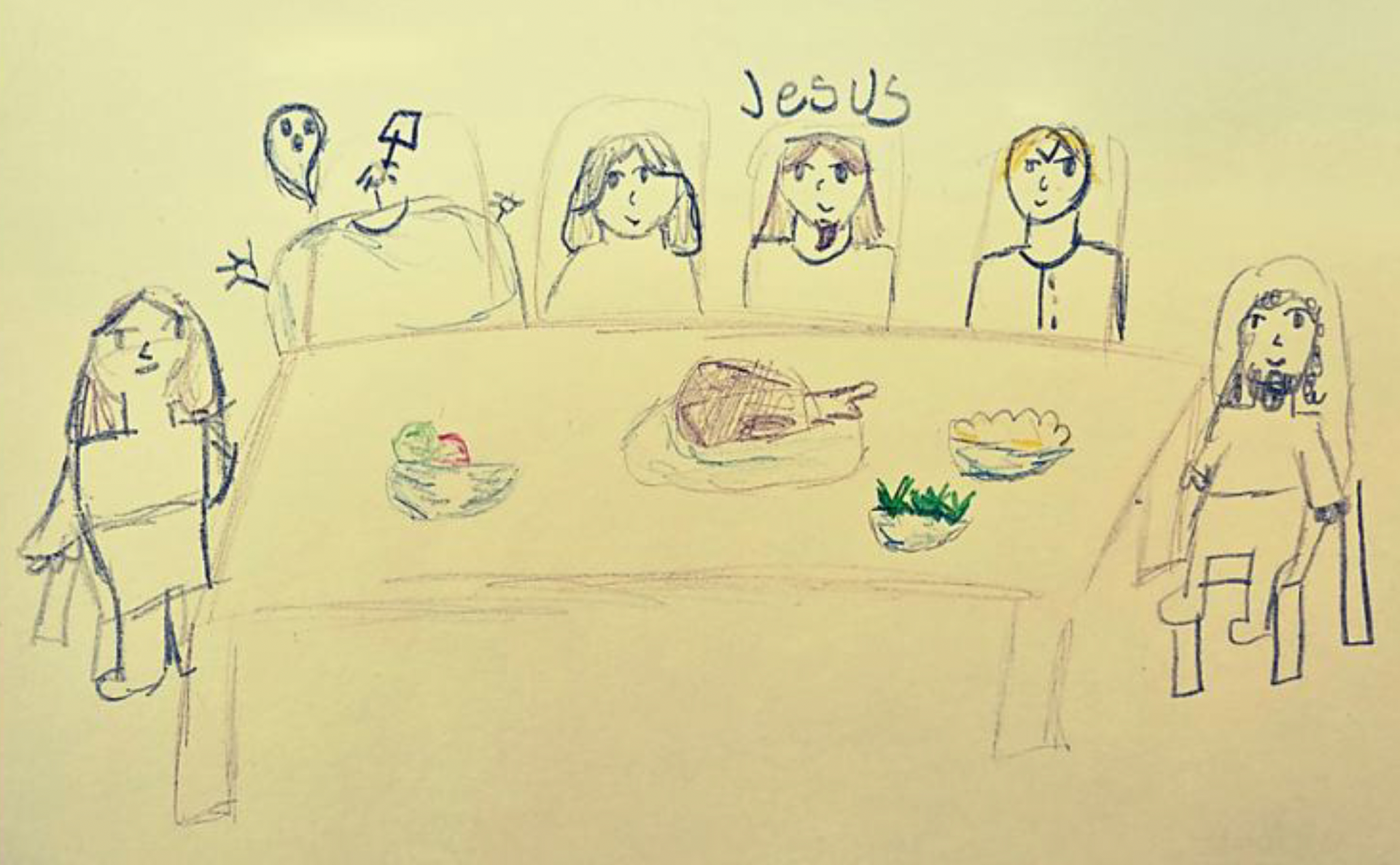
Bringing it back to the positive, let’s imagine how children stay active, follow their instinct to run, jump, roll on the floor or crunch up into a fetal position. They do it to self-sooth, to energize, and to move energy. I enjoy working with infants to fifth graders, as I see the social-emotional, physical, and cognitive development so clearly as they grow. It is fascinating to watch each child’s individual approach to the world around them. I remember that as an infant and toddler, my daughter would naturally cry through her milestones and then break into an energetic new plane of growth. Jesus respected and loved children. Jesus also wept. God gives us feelings, brains, and bodies to cope with the full scope of griefs we encounter in a lifetime. Sometimes the grief is too big. That is when we can be the church, ask for help, sit and eat with someone, and know that grief can take a long time to shift energy.
Cover photo: Alison Faison