
Sermon 11.22.2026: Setting Fear Aside
In this story from Isaiah about exile and destruction, the people of Israel are told to be afraid, to be very afraid. Be afraid of Assyria, of destruction, of each other. And Isaiah gives them a different message.
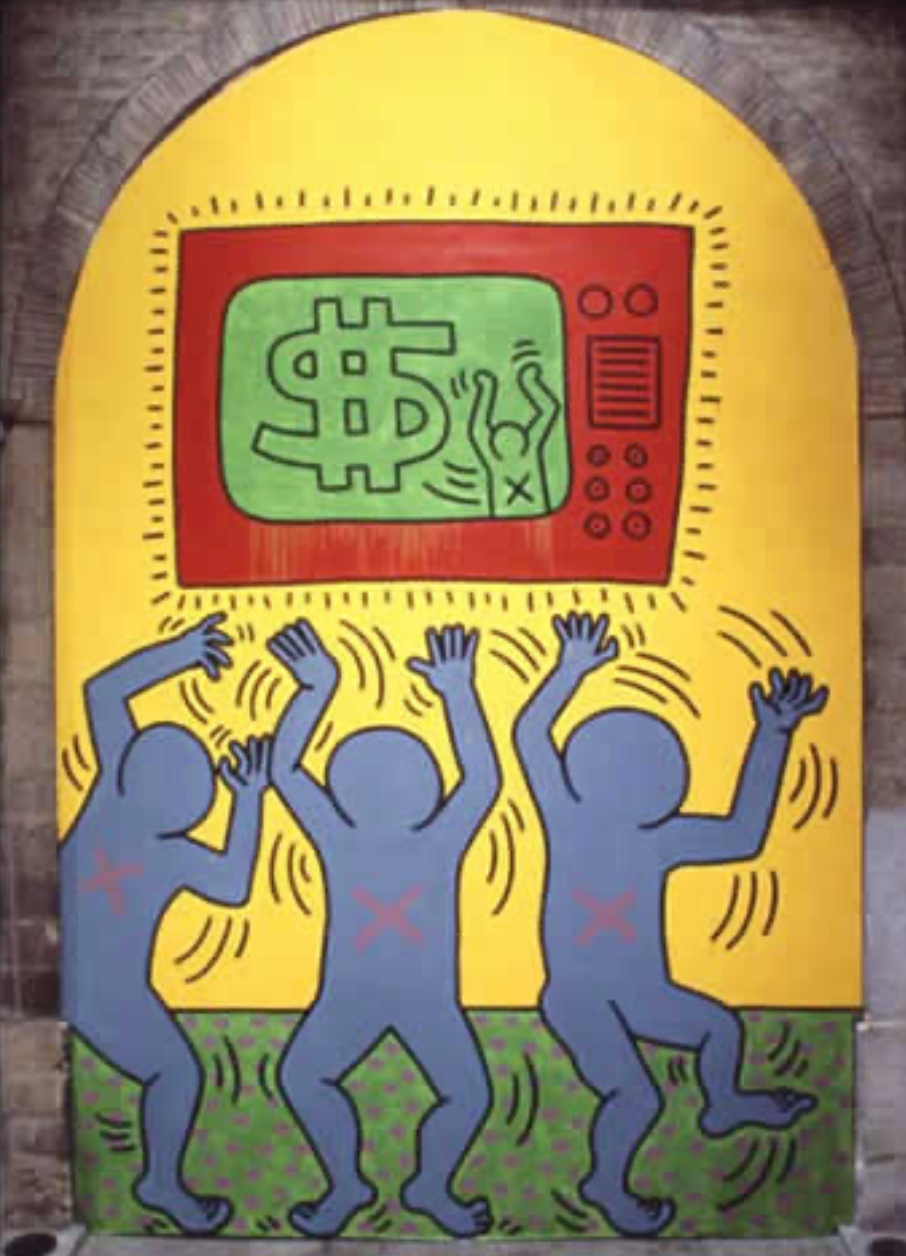
Today, we also have politicians and people trying to sell us things who tell us to be afraid, to be very afraid. What would it look like for us to set that fear aside and trust in the goodness of God? What if we saw the goodness of God in the people politicians tell us to fear?
Scripture
Isaiah 36:1-3
36 In the fourteenth year of King Hezekiah, King Sennacherib of Assyria came up against all the fortified cities of Judah and captured them. 2 The king of Assyria sent the Rabshakeh with a great army from Lachish to King Hezekiah at Jerusalem. He stood by the conduit of the upper pool on the highway to the fuller’s field. 3 And there came out to him Eliakim son of Hilkiah, who was in charge of the palace, and Shebna the secretary, and Joah son of Asaph, the recorder.
Isaiah 36:13-20
13 Then the Rabshakeh stood and called out in a loud voice in the language of Judah, “Hear the words of the great king, the king of Assyria! 14 Thus says the king: Do not let Hezekiah deceive you, for he will not be able to deliver you. 15 Do not let Hezekiah make you rely on the Lord by saying, ‘The Lord will surely deliver us; this city will not be given into the hand of the king of Assyria. ’16 Do not listen to Hezekiah, for thus says the king of Assyria: Make your peace with me and come out to me; then every one of you will eat from your own vine and your own fig tree and drink water from your own cistern, 17 until I come and take you away to a land like your own land, a land of grain and wine, a land of bread and vineyards. 18 Do not let Hezekiah mislead you by saying, ‘The Lord will deliver us. ’Has any of the gods of the nations delivered their land out of the hand of the king of Assyria? 19 Where are the gods of Hamath and Arpad? Where are the gods of Sepharvaim? Have they delivered Samaria out of my hand? 20 Who among all the gods of these countries have delivered their countries out of my hand, that the Lord should deliver Jerusalem out of my hand?”
Isaiah 37:1-4
37 When King Hezekiah heard it, he tore his clothes, covered himself with sackcloth and went into the house of the Lord. 2 And he sent Eliakim, who was in charge of the palace, and Shebna the secretary, and the senior priests, covered with sackcloth, to the prophet Isaiah son of Amoz. 3 They said to him, “Thus says Hezekiah: This day is a day of distress, of rebuke, and of disgrace; children have come to the birth, and there is no strength to bring them forth. 4 It may be that the Lord your God heard the words of the Rabshakeh, whom his master the king of Assyria has sent to mock the living God, and will rebuke the words that the Lord your God has heard; therefore lift up your prayer for the remnant that is left.”
Isaiah 2:1-4
2 The word that Isaiah son of Amoz saw concerning Judah and Jerusalem.
2 In days to come
the mountain of the Lord’s house
shall be established as the highest of the mountains
and shall be raised above the hills;
all the nations shall stream to it.
3 Many peoples shall come and say,
“Come, let us go up to the mountain of the Lord,
to the house of the God of Jacob,
that he may teach us his ways
and that we may walk in his paths.”
For out of Zion shall go forth instruction
and the word of the Lord from Jerusalem.
4 He shall judge between the nations
and shall arbitrate for many peoples;
they shall beat their swords into plowshares
and their spears into pruning hooks;
nation shall not lift up sword against nation;
neither shall they learn war any more.
Sermon
Hezekiah was a good king, even to a girl who doesn’t really like kings. The book of 2nd Kings describes him in chapter 18 this way: He did what was right in the sight of the Lord, just as his ancestor David had done…..The Lord was with him wherever he went.
He purged idols from the temple and holy places, he reformed the priesthood. And if he was like David, it means he was also human, and prone to moments of arrogance and hubris. But Hezekiah worked to be a faithful king for his people, and was faithful to God.
And he still faced invasion by the Assyrians.
When we hear of people like him, we remember that the Lord being with him wherever he went didn’t mean bad things never happened to him. It meant that he wasn’t alone in the midst of what life sent his way.
Other stories in scripture that record other invasions will often place the responsibility square on the shoulders of the invaded people, as a punishment for their unfaithfulness. We’ve recently heard a story from Jeremiah, where he instructs the people that if they change their ways, if they follow God, then God will dwell with them. Sometimes Israel seems to see their relationship with God conditionally. That doesn’t seem to be the case with Hezekiah. As far as we can see, Hezekiah has done all he has been instructed. And yet. The Assyrian’s chief of staff, the Rabshakeh, which is certainly the coolest job title in the world, shows up at the gates and starts offering people a different story.
Do not listen to Hezekiah.
Do not rely on God.
Do not ignore the fact that no other countries ’gods have been able to withstand Assyria.
Do not trust your own thoughts.
Trust us instead. Yes, were invading your country, and soon well be carting you off to exile, but for now, well let you live in your own home, and eat from your own gardens.
It’s a tough place to be for sure.
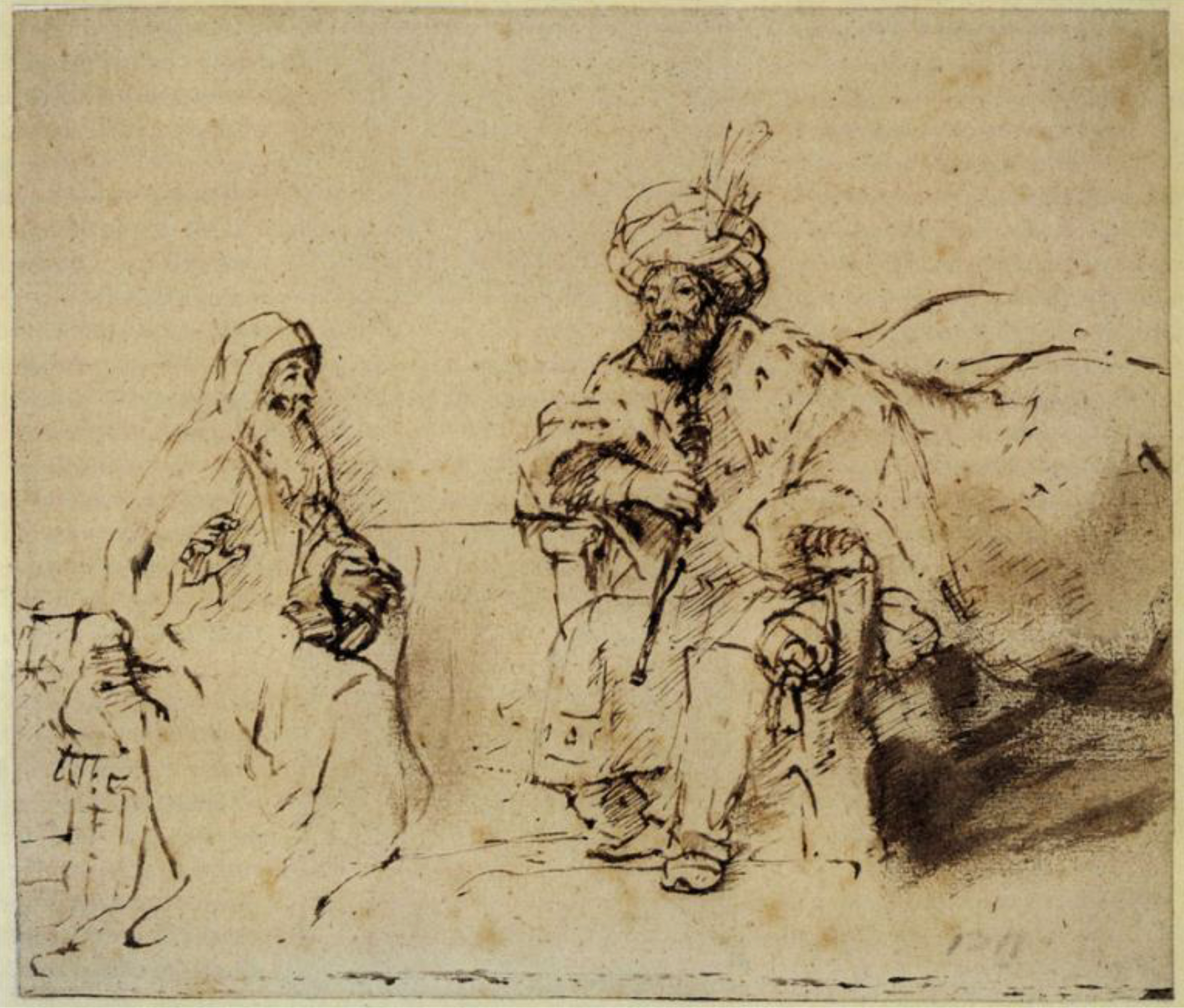
Hezekiah tears his garments and puts on sackcloth, a sign of mourning.
Perhaps we hope for a more robust response from Hezekiah, the guy that God was with wherever he went. But perhaps tilting toward despair isn’t always a bad response. His despair is more active than we often think of the word. His despair is not giving up. His despair is a frank acknowledgement of the situation on the ground.
He sends his people to meet with the prophet Isaiah. He enters into an active and visible signs of mourning that indicate to the people that he is aware of the gravity of the situation.
Rabshakeh has a lot of “do nots” in his speech— “do not trust God”, “do not trust our own need for self determination and liberty," “do not trust Hezekiah."
The response from Isaiah also includes a “do not."
“Do not be afraid."
We all know of world leaders throughout the centuries who have convinced people to go against their own interests, to go against their own values, because the leaders have whipped up fear in the people they claim to serve. They have convinced people to settle for a mild captivity, rather than risk death.
Some politicians tell us to be very afraid—of immigrants, of the other political party, of people from other religious traditions, of anyone they can “other”. And when we are led by our fears and not our faith, we fall prey to lies and we forget to look to the future in hope.
Bad leaders set up false alternatives. If you don't do X, then Y will certainly happen. The king of Assyria, and his mouthpiece, the Rabshakeh, come from a long line of despots, power hungry rulers, and petty tyrants.
I think that’s what has Hezekiah so worried. The truth is often nuanced, complicated, and not short enough to fit in a soundbite. A more compelling argument from the enemy at the gates is hard to counter, even when we know it is a lie. It sounds better and seems simple and clear. It inspires more confidence. It offers immediate benefits, even if the long term consequences are bad.
As I read this story at my bible study, I realized how disappointed I was with Isaiah’s first response to the tragedy. Do not be afraid is a consistent answer in scripture, but is hard to set aside fear when Rabshakeh is yelling at you from the gates. How can you not be afraid when there is so much to be afraid of?
And then Isaiah reports that God says I myself will put a spirit in him, so that he shall hear a rumor, and return to his own land. I will cause him to fall by the sword in his own land.
A rumor?
Really?
He will hear a rumor. And then he will die offstage, later on, and none of the people he’s yelling at now will be there to witness it.
I don’t know about you, but I want the response to bullies like the Rabshakeh to be BIG and BOLD and CLEARLY on the side of SWIFT JUSTICE.
Rumors? Justice later on? This doesn't feed my revenge fantasy very well. I want to pop popcorn and sit back to watch God mete out divine justice.
For those of us who want to be faithful to God, to trust in God and not in earthly leaders who threaten us with fear—this is the challenge.
God’s promises are not quick fixes on our terms. We don’t get to tell God how to deal with Rabshakeh. We don’t get to decide
“I'm sure that some day God will fix this, but in the meantime, Im going to hedge my bets and trust that the king of Assyria is my best bet for the moment."
What does it mean for us to not be afraid? Especially when the counter message—to be very afraid—makes so much more sense for anyone reading the news.
What could we accomplish if we weren’t afraid?
What could we accomplish, as a nation, as a congregation, if we decided we weren’t going to let fear be the only story we listen to when it yells at us at the city gates?
There is no promise that tragedy will not befall us when we follow God’s call to not be afraid, when we respond with hope and faith. Like Hezekiah,, our faith in God shapes our response to the news of the world, not the other way around.
And it feels like the news of the world has been working overtime to give us sermon illustrations for this story. Last week, air travel stopped, and we weren’t given answers we could trust about just what happened. Email went out, for those of us who use Microsoft. Some banks and other corporations websites and apps stopped working for a bit. Maybe AI will save us or maybe it will take over and enslave us. Who knows? And then the Bay Area’s streets turned to rivers with the rain and tides are apparently coming for us this week, right as people get ready to travel for Thanksgiving.
Do not be afraid, says Isaiah. But also, don’t drive through floodwaters.
There’s a lot to fear.
I get that.
But if we want to get through it, we can’t be led by our fear. We have to be led by our hope. We have to remember we belong to each other. We are each other’s keepers.
Mother Theresa is quoted as saying, if we have no peace, it is because we have forgotten that we belong to each other.
I invite you to read along in Isaiah this week. See how it works out for Hezekiah who responds to words of fear with faith.
What could we accomplish if we remember, if we choose, not to let our fear define us?
Last week we dedicated our pledges for the coming year. It’s not too late to join us.
I don’t think we are as gripped by fear as some churches seem to be, but it’s there. Membership is not rising. The budget is not rising. But costs are. And anxiety about rising costs outside the building that we all face in our lives is a fear that affects generosity and giving.
If everyone gives this next year what we all gave last year, we’ll get by. And if everyone decided to pledge something, anything, our ability to amplify God’s message of love in this city would increase dramatically. $10 more a week from everyone in worship would increase the budget by $130,000.
For those of you who are already at the limit of what you can give, thank you. For the rest of us, maybe this is the year to dream big.
What could we accomplish if we remember, if we choose, not to let our fear define us?
Abraham Lincoln once said “Be sure you put your feet in the right place, then stand firm”. I looked up that quote to make sure Lincoln actually said it. I know not to trust everything I read on the internet.
And he did say those words. To a woman he was helping to get across a muddy road. From paving stone to paving stone, one step at a time.
Isn’t that how we’re supposed to move through life? We often think about the big-ness of the world’s problems and how overwhelming they are. But our faith calls us to not be afraid, and to be sure we put our feet in the right place, and then stand firm. And it is in those smaller moments that we complete the journey.
Listen to the final section of our assigned scripture passage today, from the 2nd Chapter of Isaiah:
The word that Isaiah son of Amoz saw concerning Judah and Jerusalem.
In days to come
the mountain of the Lords house
shall be established as the highest of the mountains,
and shall be raised above the hills;
all the nations shall stream to it.
Many peoples shall come and say,
Come, let us go up to the mountain of the Lord,
to the house of the God of Jacob;
that he may teach us his ways
and that we may walk in his paths.
For out of Zion shall go forth instruction,
and the word of the Lord from Jerusalem.
He shall judge between the nations,
and shall arbitrate for many peoples;
they shall beat their swords into ploughshares,
and their spears into pruning-hooks;
nation shall not lift up sword against nation,
neither shall they learn war any more.
The violence of the Rabshakeh, yelling at the city gates manages, for a time, to compel people to act out of their fear.
The vision of Isaiah, of nations streaming to God’s holy mountain so God can teach us the ways of peace—that is a vision that lasts. And one we can lift up every time people try to compel us toward fear. Do not fear, God tells us. For one day, we will learn God’s ways and take God’s paths and we will know peace.
Amen.