Sermon 06.21.2026: A Particular Kind of Church
Before Pastor Marci leaves for Sabbatical, she'll share a vision the Session is dreaming for the church, and how we can use this sabbatical time to live into our vision.
In our story from Paul's letter to the Romans, we're reminded that we're called to particular service when we follow Jesus. How can we be faithful to who God is calling us to be today? And in our story from Jeremiah, we are reminded that God calls us to care for the communities in which we are planted. How can we be the best neighbor for our community?
Scripture
Romans 12
I appeal to you therefore, brothers and sisters, by the mercies of God, to present your bodies as a living sacrifice, holy and acceptable to God, which is your spiritual worship. Do not be conformed to this world, but be transformed by the renewing of your minds, so that you may discern what is the will of God—what is good and acceptable and perfect.
For by the grace given to me I say to everyone among you not to think of yourself more highly than you ought to think, but to think with sober judgement, each according to the measure of faith that God has assigned. For as in one body we have many members, and not all the members have the same function, so we, who are many, are one body in Christ, and individually we are members one of another. We have gifts that differ according to the grace given to us: prophecy, in proportion to faith; ministry, in ministering; the teacher, in teaching; the exhorter, in exhortation; the giver, in generosity; the leader, in diligence; the compassionate, in cheerfulness.
Let love be genuine; hate what is evil, hold fast to what is good; love one another with mutual affection; outdo one another in showing honour. Do not lag in zeal, be ardent in spirit, serve the Lord. Rejoice in hope, be patient in suffering, persevere in prayer. Contribute to the needs of the saints; extend hospitality to strangers.
Bless those who persecute you; bless and do not curse them. Rejoice with those who rejoice, weep with those who weep. Live in harmony with one another; do not be haughty, but associate with the lowly; do not claim to be wiser than you are. Do not repay anyone evil for evil, but take thought for what is noble in the sight of all. If it is possible, so far as it depends on you, live peaceably with all. Beloved, never avenge yourselves, but leave room for the wrath of God; for it is written, ‘Vengeance is mine, I will repay, says the Lord.’ No, ‘if your enemies are hungry, feed them; if they are thirsty, give them something to drink; for by doing this you will heap burning coals on their heads.’ Do not be overcome by evil, but overcome evil with good.
Jeremiah 29:4-11
Thus says the Lord of hosts, the God of Israel, to all the exiles whom I have sent into exile from Jerusalem to Babylon: Build houses and live in them; plant gardens and eat what they produce. Take wives and have sons and daughters; take wives for your sons, and give your daughters in marriage, that they may bear sons and daughters; multiply there, and do not decrease. But seek the welfare of the city where I have sent you into exile, and pray to the Lord on its behalf, for in its welfare you will find your welfare. For thus says the Lord of hosts, the God of Israel: Do not let the prophets and the diviners who are among you deceive you, and do not listen to the dreams that they dream, for it is a lie that they are prophesying to you in my name; I did not send them, says the Lord.
For thus says the Lord: Only when Babylon’s seventy years are completed will I visit you, and I will fulfil to you my promise and bring you back to this place. For surely I know the plans I have for you, says the Lord, plans for your welfare and not for harm, to give you a future with hope.
Sermon
This sermon is going to be a little different than our usual. This is my last sermon before I leave for the Presbyterian Church’s General Assembly, the national meeting of the church. And when GA is over, I’ll be on Sabbatical in July and August. I’ll be back with you in September, as we kick off the program year, and then will take my third sabbatical month in October. Thank you for the gift of this time you are giving me. You’ll be in good hands while I’m gone.
Today, I want to leave you with some things to think about over the summer. The session, or leadership board, of the congregation has been working on some new mission and vision focus for us, growing out of some strategic planning work we’ve been doing this past year. We’re not quite ready to launch it yet, but the broad brushstrokes of it are included in what I’m talking about today.
As we’ve been working on the vision language, part of the challenge is to identify how we are different from some other churches—why would someone want to come join in with what we’re doing here rather than go to a church across town? Think about that for a second. Why are you here? Maybe you’ve been here over decades and have seen some changes. Maybe you’re a more recent arrival. But something brought you here. And I suspect maybe something else here is what made you keep coming back.
There’s no one right answer to the question either. But what makes Calvary Calvary?
And what, in particular, is God calling us to work on in this season, recognizing that God is calling other congregations to serve God’s world in slightly different ways?
It isn’t ever a competition with other churches. It isn’t about deciding that we hold the right answers and all others are wrong. That’s God’s business, not ours. Our call is to be faithful to what God is dreaming for us right now, what God is calling us to do, in this season. As Paul says in Romans, “For as in one body we have many members, and not all the members have the same function, so we, who are many, are one body in Christ, and individually we are members one of another.” We are one part of the body of Christ, and the healthier we are, the healthier the rest of the body will be too. We want all the other faith communities in San Francisco to thrive as well. Collectively we are the body of Christ.
What makes Calvary Calvary?
We like to talk about how everyone is welcome here. And that sounds nice, and it does fit with our belief in God’s radical welcome and inclusion. But in truth, we don’t believe God is calling us to evangelize to every single person in the Bay Area. To say our welcome is wide is different than saying everyone should be a member of Calvary.
Some things that make people feel at home in church are deeply theological. If you don’t think scripture allows for women to be preachers, we might not be your place. Others are more about preference. If you prefer a drum set and electric guitars for worship to feel like worship, we don’t have that here.
So we’re working to be faithful to the particularities with which God is calling us and we trust that God is preparing other churches with different assignments. All of us, together, make up the Body of Christ.
Paul was writing to a particular church too, the church in Rome, a community he has never visited, a church shaped by being in the capital of the dominant empire of their day.
Paul doesn't open with doctrine. He opens with the body—“present your bodies as a living sacrifice." This is incarnational language before incarnation was a fully developed theological category. Faith is not a private interior experience. It is something you do with your body, in community, in public.
Each Christian body is shaped by their location, by what is going on around them in the world, by different levels of safety or risk, security or danger, comfort or challenge. Paul reminds them, and he reminds us, that our faith is lived out in embodied ways and so we offer our bodies in sacrificial ways so that we can best support each other and build the world we want to live in.
He then tells them, “Do not be conformed to this world, but be transformed by the renewing of your minds.”
The word in Greek that Paul uses for “conformed" is about being pressed into a mold. Shaped by external forces until you take their form. The Roman world had a mold. It had hierarchies and exclusions and ways of deciding who mattered. The church, Paul says, is called to resist that mold — not by withdrawing from the world, but by being transformed from within.
Society certainly has molds it would like us to fit in. Religion has its own molds too. Some churches want us to fit into theological molds that value certainty over questions, doctrine over doubt. Each church has its own cultural molds too—what people wear to worship, how sacred coffee hour might be, whether you talk about conflict directly or not.
Some of our molds developed for good reasons. Some were formed to shelter people who needed protection either from society or from the church. Some were formed to give identity and belonging. Think of your favorite cookie cutter. You roll out the dough and soon your baking tray is full of identically shaped cookies to bake. There are moments when being a cookie that looks like all the other cookies provides safety and belonging.
But Paul's word is clear: don't be conformed. Not even to the church's own accommodations to fear. Paul isn’t accusing them of something, he’s inviting them into a deeper relationship with God, with each other. The cookie cutter mold that protected people in one season may be the very thing that keeps others out in another. Transformation—metamorphosis, Paul's word—is not a betrayal of the past. It's what living things do. It's what the Holy Spirit brings to the church.
What molds has Calvary been pressed into—not by the world, but by its own history, its own survival instincts, its own reasonable accommodations? And what would it look like to be transformed rather than conformed—to let the Spirit reshape what we've been into what we're called to be?
Think about the molds you’ve been pressed into in your life. Sometimes it feels safe and comforting to be held close. But often in my life, being pressed into a shape someone else wants me to be feels confining and restricting. And it sometimes takes a while to realize what had felt like safety was really just a limit I no longer needed.
If you know me at all, you know that I can be quite opinionated and rather forceful in my personality. I like to lead. I don’t really love following. Defending underdogs, standing up to power, and speaking inconvenient truths have been part of my make up from the very beginning. And let me tell you how unwelcome those traits are in young girls in our society.
I was told I was too much, that I should not always stand up to the school principal, that life would be easier if I toned it down a bit. Why couldn’t I just be a bit less?
And so, I shoved my 10-pound personality into a 5-pound sack and tried to fit the mold. Think about how that looked in your life. Maybe you had too many feelings. Maybe you spent too much time in your thoughts. Maybe you were an athlete in a family of opera singers. However that looked in your life, we’ve all been told to conform to this world, in one way or another.
And it works for a while. It gives you the safety of anonymity and hopefully gives you the space to figure out how to navigate the world with the particular gifts you have been given. But ultimately, the world is better off when each of us can be who we were born to be, transformed, rather than conformed in Paul’s language— the world is better off, and the body of Christ is healthier, when we can live into the particular gifts with which God has graced each of us.
And what is true for us as individuals is true for congregations too. We aren’t called to fit into the mold of cookie cutter Christianity. We are called to transform into the particular congregation God needs us to be. This is what our vision work has been about.
Paul's letter is addressed to a specific community in a specific city. He's not writing to the church in the abstract. He's writing to Rome — to people living inside the empire, navigating its pressures every day. Which raises a question: if you're called not to be conformed to the world, but you're also called to live in it — what does faithfulness actually look like on the ground, in this city, in this moment?
The description Paul gives in our passage in Romans 12 is a good instruction and I encourage you to look it over this week and see what parts of that passage resonate with you in your life.
But I want to pivot to our passage from Jeremiah. He’s writing to people in exile in Babylon. And people expected one of two messages from a prophet, either “you done screwed up and now you’re in a mess. You better repent and change your ways” or “hold on! Rescue is coming soon”.
Jeremiah says neither. He says something far more disorienting: "settle in. Plant gardens. Build houses. Have children. Seek the welfare of the city where I have sent you—for in its welfare you will find your welfare.”
Seventy years, he says. This is not a short exile. Babylon is the enemy who destroyed the temple, the city, the monarchy—everything that held their identity together. And God says: seek its welfare.
God doesn’t say: tolerate it. God doesn’t say: survive it. God calls them to Seek its welfare. Invest in it. Pray for it. Let their flourishing be bound up with its flourishing. God also doesn’t tell them to conform to Babylon or its ways. God is offering them a radical claim—that even in Babylon, God is at work, transforming the world. As Paul says to the Romans: Do not be overcome by evil but overcome evil with good.
That’s what transforms the world and doesn’t just conform to it.
Their choice is whether or not to participate in what God is doing. This is not accommodation to empire. It's a radical theological claim: God is present and active even in Babylon. The story God is writing doesn't stop at the borders of the holy land. It continues here, in this strange place, among these particular people. And they are being called to be God’s agents of transformation in Babylon. Because if there's a place that needs transformation, it is certainly Babylon. Imagine, God asks, how the world could look if Babylon were transformed into God’s new creation?
Now, San Francisco is not Babylon—even if the national news likes to portray us that way.
But we know something about living in a city that feels, in this political moment, like exile. We are watching the country we love move in directions that feel alien and threatening.
—We are being told to conform to the power of fear, making us turn away from our neighbors, and making us distrust people who aren’t in our tribe.
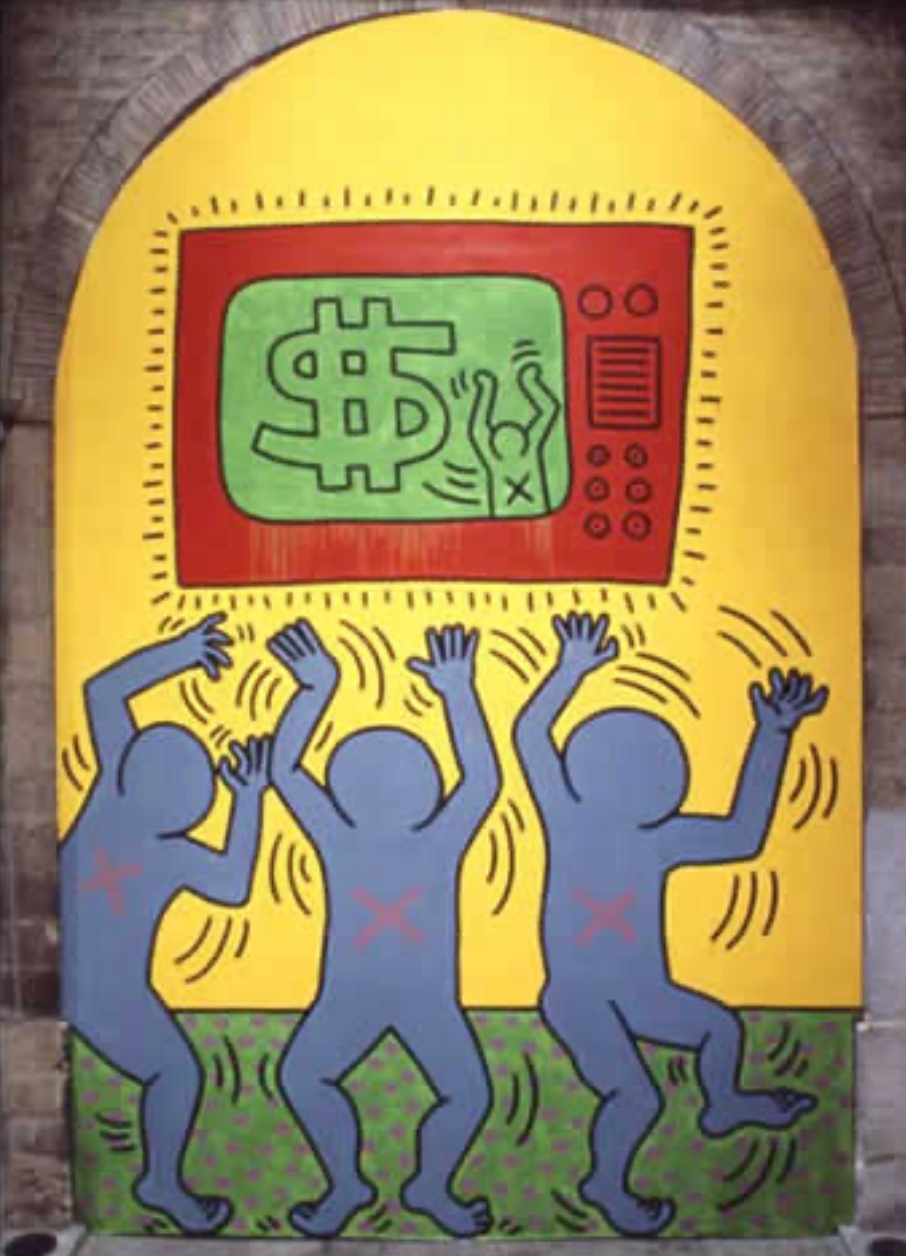
—We are being told to conform to the lure of unchecked wealth, as if one person could ever need a billion or a trillion dollars in one lifetime, while people starve and struggle.
—We are being told to conform to the seduction of hatred, as if there are people on this planet God doesn’t love and whose wellbeing is not important.
And God's word to the exiles in Jeremiah’s time is the same word to Calvary: don't withdraw from each other. Don’t focus on only your own survival. Seek the welfare of this city. Plant. Build. Stay.
For over 170 years, Calvary has been doing exactly that. This isn't a new calling—it's the calling we've always had, and it is now more urgent than ever.
And here’s our challenge. The world wants us to conform, not be transformed. The false prophets in Babylon were telling the exiles what they wanted to hear: "Don't settle in, rescue is coming soon.” They were offering comfort that required nothing—no investment, no roots, no risk.
I feel the lure of that, of just putting my head down and not causing a stir. Withdrawing from the challenges of the world when there are so many challenges—that is tempting. But Jeremiah's word is harder and truer: plant gardens. Build houses. Seek the welfare of the city. We can't do that from a position of strategic silence, or while we’re withdrawn and locked away from the cares outside these doors. We cannot amplify God's story of justice and expansive love while keeping our voices down.
The exiles who received Jeremiah's letter had to decide: do we live as though we're leaving soon, as if we’re disconnected from the world we live in, or do we live as though this is where God has planted us and choose to participate in transformation?
Here’s what I see when I look at you.
—I see a community that has been widening its circle for 172 years, continuing to listen to the Holy Spirit and welcoming people who have faced exclusion in the world, and in the church.
—I see people who show up for each other and for the City. You feed people. You provide a comforting presence for the people waiting for their ICE check-ins on Wednesday mornings. You contact your supervisors and the mayor when the City fails to protect the people who need our help the most. And you’ve been showing up for the City from the beginning—protesting the vigilante movement in the early gold rush days, providing space for civic groups after the ’06 earthquake. Caring for people during the AIDS crisis.
—When I think about Calvary, I see a generosity of spirit for each other. I see little old ladies who are and have been radical activists for years sitting next to young people who love the pipe organ. I see people who come to worship dressed to then go to a Giants game next to people who are dressed to go to the opera. You let people be who they are, so their “Sunday best” isn’t about how they are dressed but about how they can show up as their most authentic self.
—I see long time Presbyterians sitting next to people who are reconstructing everything they thought they knew about faith and who may still be a little shocked to find that they have come back to church after what it did to them years ago, and both of those groups are sitting next to people who are completely new to faith. And there is a generosity in your presence with each other, not assuming anyone should have all the answers, and trusting that questions are an authentic part of the faith journey.
—I see a coffee hour that runs long because people enjoy each other’s company and genuinely don't want to leave.
Look around. Think again about why you are here today.
What if this is what the church was always meant to be?
What if the particular reason God has planted us here is to amplify God's story of justice and expansive love in San Francisco.
What if God is inviting us to work for the welfare of the City, to create a place where the vulnerable feel safe, the comfortable feel challenged, and people who have been told they don't belong finally feel, in their bones, that they do.
What if this is what the church was always meant to be?
I asked you why you are here today, why you’re at Calvary when you could be off doing other things today. Let me tell you why I’m here.
I grew up going to church. I always liked being at church. But it was when I was in college, and had a really challenging and difficult year, that I learned what church was about for me.
I got pregnant when I was 19 years old and a college sophomore. I placed my son for adoption and sometime I’d be happy to show you pictures of him. I’ve been in his life all the way through and it is a resurrection story for me. Because when I placed my son for adoption, I thought the dreams I had for my life were over. I couldn’t begin to picture that God could still be dreaming something good for me. And even if I had dreamed, it wouldn’t be as great as it has been. I have grandchildren I know and love. I’ve been in Eric’s life the whole time. He’s a gift.
My resurrection story involves the church too. Because when I expected judgment and shame from the church where I was worshiping, I instead received grace and support. And when you experience kindness when you expect judgment, it is startling. That church welcomed me in, and loaned me maternity clothes, and took me out to lunch, and cared for me.
That experience of grace showed me more about God than any of the exclusion, hypocrisy, and hate I’d seen from public ‘christians’ in the news. And I didn’t put it together at the time, but I am certain that I became a pastor to give Jesus better PR than our culture tends to give him.
And each time a baseball player tries to defend their faith with a Bible verse on their Pride hat, or each time a church is in the news for clergy misconduct, or each time a ‘christian’ yells at a young woman going to Planned Parenthood for healthcare, or each time a church says that God’s love requires someone to hate themselves—people turn away from religion.
Think of how many people you know, or know of, who could use a supportive community like this, people who would benefit from a message of grace, and a safe place to ask their questions. Think of the people who have rightly left religion because of the hatred and exclusion shown them in the name of love.
Jesus needs better PR and I think we’re one of the churches that can help. What if we could amplify the deep goodness in the love of God?
That’s why I’m here at Calvary, why I accepted this call in the early days of a global pandemic. I am here because I believe this is the congregation that can help San Francisco, and the world, hear a different message then they see on the news.
Surely I know the dreams I have for you, says the Lord. Dreams for your welfare and not for harm, dreams to give you a future with hope.
What if this is what the church was always meant to be?
May it be so. Amen.