
Sermon 06.07.2026: Gleaning Grace
Who is the hero in a story of two women on the margin, looking to survive, praying for a break? What does the story of Ruth and Naomi teach us about the way we care for each other, about the way we structure our society? Where is grace to be gleaned in a story of famine?
Scripture
Ruth 2:1-23
Now Naomi had a kinsman on her husband’s side, a prominent rich man, of the family of Elimelech, whose name was Boaz. And Ruth the Moabite said to Naomi, ‘Let me go to the field and glean among the ears of grain, behind someone in whose sight I may find favour.’ She said to her, ‘Go, my daughter.’ So she went. She came and gleaned in the field behind the reapers. As it happened, she came to the part of the field belonging to Boaz, who was of the family of Elimelech. Just then Boaz came from Bethlehem. He said to the reapers, ‘The Lord be with you.’ They answered, ‘The Lord bless you.’ Then Boaz said to his servant who was in charge of the reapers, ‘To whom does this young woman belong?’ The servant who was in charge of the reapers answered, ‘She is the Moabite who came back with Naomi from the country of Moab. She said, “Please let me glean and gather among the sheaves behind the reapers.” So she came, and she has been on her feet from early this morning until now, without resting even for a moment.’*
Then Boaz said to Ruth, ‘Now listen, my daughter, do not go to glean in another field or leave this one, but keep close to my young women. Keep your eyes on the field that is being reaped, and follow behind them. I have ordered the young men not to bother you. If you get thirsty, go to the vessels and drink from what the young men have drawn.’ Then she fell prostrate, with her face to the ground, and said to him, ‘Why have I found favour in your sight, that you should take notice of me, when I am a foreigner?’ But Boaz answered her, ‘All that you have done for your mother-in-law since the death of your husband has been fully told me, and how you left your father and mother and your native land and came to a people that you did not know before. May the Lord reward you for your deeds, and may you have a full reward from the Lord, the God of Israel, under whose wings you have come for refuge!’ Then she said, ‘May I continue to find favour in your sight, my lord, for you have comforted me and spoken kindly to your servant, even though I am not one of your servants.’
At mealtime Boaz said to her, ‘Come here, and eat some of this bread, and dip your morsel in the sour wine.’ So she sat beside the reapers, and he heaped up for her some parched grain. She ate until she was satisfied, and she had some left over. When she got up to glean, Boaz instructed his young men, ‘Let her glean even among the standing sheaves, and do not reproach her. You must also pull out some handfuls for her from the bundles, and leave them for her to glean, and do not rebuke her.’
So she gleaned in the field until evening. Then she beat out what she had gleaned, and it was about an ephah of barley. She picked it up and came into the town, and her mother-in-law saw how much she had gleaned. Then she took out and gave her what was left over after she herself had been satisfied. Her mother-in-law said to her, ‘Where did you glean today? And where have you worked? Blessed be the man who took notice of you.’ So she told her mother-in-law with whom she had worked, and said, ‘The name of the man with whom I worked today is Boaz.’ Then Naomi said to her daughter-in-law, ‘Blessed be he by the Lord, whose kindness has not forsaken the living or the dead!’ Naomi also said to her, ‘The man is a relative of ours, one of our nearest kin.’* Then Ruth the Moabite said, ‘He even said to me, “Stay close by my servants, until they have finished all my harvest.” ’ Naomi said to Ruth, her daughter-in-law, ‘It is better, my daughter, that you go out with his young women, otherwise you might be bothered in another field.’ So she stayed close to the young women of Boaz, gleaning until the end of the barley and wheat harvests; and she lived with her mother-in-law.
Sermon
When I have casual interactions with strangers in public places, such as airplanes, coffee shops, or car dealerships, the question I hate the most is, “what do you do for a living?” Being a female pastor opens you up to …opinions.
Once, a man exclaimed as I confessed to being a pastor, “you’re the first lady preacher I’ve ever met!” It was like I had just been released into the wild and photographed at a game park, a rare lady preacher sighting.
I also don’t want to lie when I meet people and tell them I ’m a rocket scientist or a lion tamer. Because what if they show up to a funeral here and see me leading worship? I do sometimes tell people, on airplanes especially when I just don’t wanna…., that I’m in “direct sales”. It’s not not true…but it always ends the conversation.
Pastors have to tell the truth, no matter what conversation might ensue.
So once, when I was test driving cars, the nice young salesman was totally excited to have met a church person because he was really active at his church and wanted to be a pastor some day. If I were to tell you the name of his church, you’d have a sense of how very different it is from this one.
He asked what my text was for preaching that week, and I told him Ruth.
“My pastor preached a sermon on that book! It was great. What was the main guy’s name again?”
“You mean Ruth?” I asked.
“No. The main guy? Barabbas?”
“Boaz”, I said.
“Yeah! That’s him. The pastor told us to become like Boaz, and take care of women”.
I just looked at him. But in my head, I wanted to say, “Yes, Naomi and Ruth were lucky they found a Boaz, and he’s a good guy, so sure, be like Boaz. But maybe consider also working for systemic change in the world so women aren't so vulnerable economically and physically in the first place. Wouldn’t it be nice if women could survive without having to be saved by men from the actions of men?”
Instead I said, “So, tell me about the safety features of this car….”
My car salesman was a very nice guy, and I’m sure he’s now a good pastor for his flock.
And he’s illustrative for how we all can be. Our culture has a tendency to lift up stories of the people who help people out. But we often lift those feel-good stories up at the expense of the stories of the people who are vulnerable and need the help, and without considering our culpability in creating a system that leaves people vulnerable in the first place.
Boaz does a good thing for these distant kinswomen. They might have died of hunger if not for him. We are thankful for Boaz. If it happened today, it would be come a viral, heartwarming Facebook post.
The one I read last week was a teacher on a plane was talking to her seat mate about the challenges of being a teacher in an era when tax cuts have slashed school funding, which means no supplies, no help for teachers to set up their classrooms, no help for kids who can’t buy their own stuff.
By the end of the flight, the seat mate had asked for her school’s address so he could send something to help out. And the guy behind her handed her $500 cash, and the person across the aisle handed her the cash he had on hand.
And it’s all very nice and good. Very Boaz-like. But at the end of the day, the rest of the teachers in the rest of the schools around the country, are still wondering how to buy crayons for their classroom.
A while back there was a reality TV show where recent college graduates competed against other recent graduates for the chance to pay off their college loans. It set us up to celebrate a few feel good outcomes, while crippling student loans for college tuitions that have far outpaced inflation go on, unchecked. The average salary for a person in their 30s today is unchanged since the 1970s. Want to know what has not stayed the same? The cost of college. Or the cost of a house, for that matter.
Game shows will not fix that discrepancy.
I often get emails, and I'm sure you do too, asking for support of go fund me, crowd funding accounts to help people pay for medical bills. And I’m glad to help out as I can. The last congregation I served raised money to erase $1.5 million of medical debt for people in Idaho. It was helpful to those people, but it was a drop in the bucket. Bake sales and go fund me’s are not the most efficient way to deal with our ever rising healthcare costs and ever decreasing insurance availability.
Clearly we should help each other. Don’t hear me suggesting we should not help out the people we see in need. I just want to make sure we are clear that creating a more just and generous society in the first place will be of more help to more people than any of our individual efforts will be. If we want to make sure everyone pulls themselves up by their own bootstraps, let’s make sure they all have access to boots.
It probably feels better, and more immediately gratifying, to help one person and see the difference you make, and feels less gratifying to pay taxes, or pay a pledge to the church, or a donation to another agency that pays off further down the road, in ways that feel disconnected to you. But it is collective action that changes systems and I hope we never forget that we belong to each other and caring for each other is a way of caring for ourselves.
I don’t know if Bethlehem in Boaz’s day had the same level of political rancor we have today. But they had similar problems. Women who didn’t have men to protect them faced hunger—on the good days—and physical violence on the bad ones.
Did you notice that as the story was read? The biblical account hides the danger a bit. Ruth was warned to stay near the other women for protection. Boaz said he’d ordered his young men not to "bother" her. By going into the fields to glean, she was very vulnerable and at risk. Boaz guaranteed her access to food and water, which was not assumed. He even gamed the gleaning system for her, telling his men to harvest less so that she could glean more.
Gleaning is lifted up in Leviticus and Deuteronomy as a system to allow the hungry poor to gather grain, olives, and grapes after the crops had been officially harvested.
Leviticus 23:22 says, “When you reap the harvest of your land, you shall not reap to the very edges of your field, or gather the gleanings of your harvest; you shall leave them for the poor and for the foreigner: I am the Lord your God.”
It’s a biblical attempt at a food bank, of sorts—using what’s left over from the harvest, what isn’t worth the financial cost to harvest, to feed people.
And it is the economy in which Ruth and Naomi found themselves.
Gleaning is not a perfect solution, but it is an elegant one, to start to address hunger. When it works well, it also changes the giver. If you realize, I was able to share the part of the harvest I wasn’t going to collect anyway and someone was fed because of it. That didn’t really cost me anything—when you realize that, you then wonder, maybe I can do more and still have enough for my own family.
That’s how my husband and I have experienced pledging to the church. Each time we raised our pledge, I used to wonder, will we have enough to cover this. And over time, I’ve learned that when we start from generosity, there is always enough. Now I can trust in it. It is no longer a source of anxiety for me, but an act of faithful hope.
Awareness of abundance creates a mindset of abundance and generosity.
When compassionate concern and love is extended, it cascades out. Love and compassion engender other acts of love and compassion. Faith kindles faith. Concern extended by one person serves as a reminder to others to also extend concern.
We see that continue to play out here as well. Ruth asks Boaz why he is being kind to her, a foreign woman. He replies, ‘All that you have done for your mother-in-law since the death of your husband has been fully told me, and how you left your father and mother and your native land and came to a people that you did not know before. May the Lord reward you for your deeds, and may you have a full reward from the Lord, the God of Israel, under whose wings you have come for refuge!’
I’m gonna continue to be the person who advocates for structural changes in our community and society to make peoples ’lives better. Because that’s who I am.
I also want to acknowledge and lift up that even in the midst of unjust systems, there are blessings to be had. And we are both the people to extend those blessings, as in the stories I shared earlier, and the people on the lookout to receive them.
If we are to extend the blessings, we start by recognizing our own blessings, so we can have a grounding in gratitude that will allow us to grow into abundant generosity.
And then we will have to pay attention to who is struggling in our communities. I worry today we wouldn’t get to know Ruth and Naomi because we’d say, “they should have stayed in their own country”.
Or we wouldn’t have the watchful eye of Boaz to even notice them, because we’re so busy ourselves. I thought about Ruth and Naomi this week when I walked past a homeless person holding a sign. I was in a hurry to get somewhere on time. I was too busy to extend a blessing to a stranger. Also, I’m no longer in the practice of carrying cash. I had nothing to give them.
And as hard as it may be to extend the blessings, of being like Boaz, I know it can also be a challenge to be on the receiving end of them.
We may not experience the same level of injustice and difficulty as Ruth and Naomi, but when we find ourselves in those moments where challenge and bad news are the order of the day, can we glean blessing from the nearly empty fields?
If we look at a field, or our life, and say, “nope, nothing good here. All of the crop has been harvested”, what do we miss that is there to be gleaned? Because we don’t need a million pounds of grain to be blessed.
What Ruth gleaned was an ephah of grain. I looked it up because my biblical Hebrew agricultural vocabulary has gotten a little rusty over the years. From what was left behind in the fields, Ruth was able to gather a bushel of grain. And because my agricultural vocabulary in my own language is also rusty, I looked that up too. A bushel is about 8 gallons. Enough.
From what was left over in the fields, Ruth was able to collect enough to get them through.
I experience you gleaning blessings out of what other people might consider empty fields.
In hospital rooms, and after finding diagnoses, even as people are dying, I’ve learned the conversation is often about blessing, about gratitude for the gifts in their lives, about thankfulness for the kindness and care from people.
I pray we can continue to be the people who both work for bigger, systemic changes to build a better world for everyone AND also be the people who glean an ephah of blessings from fields where other people see emptiness.
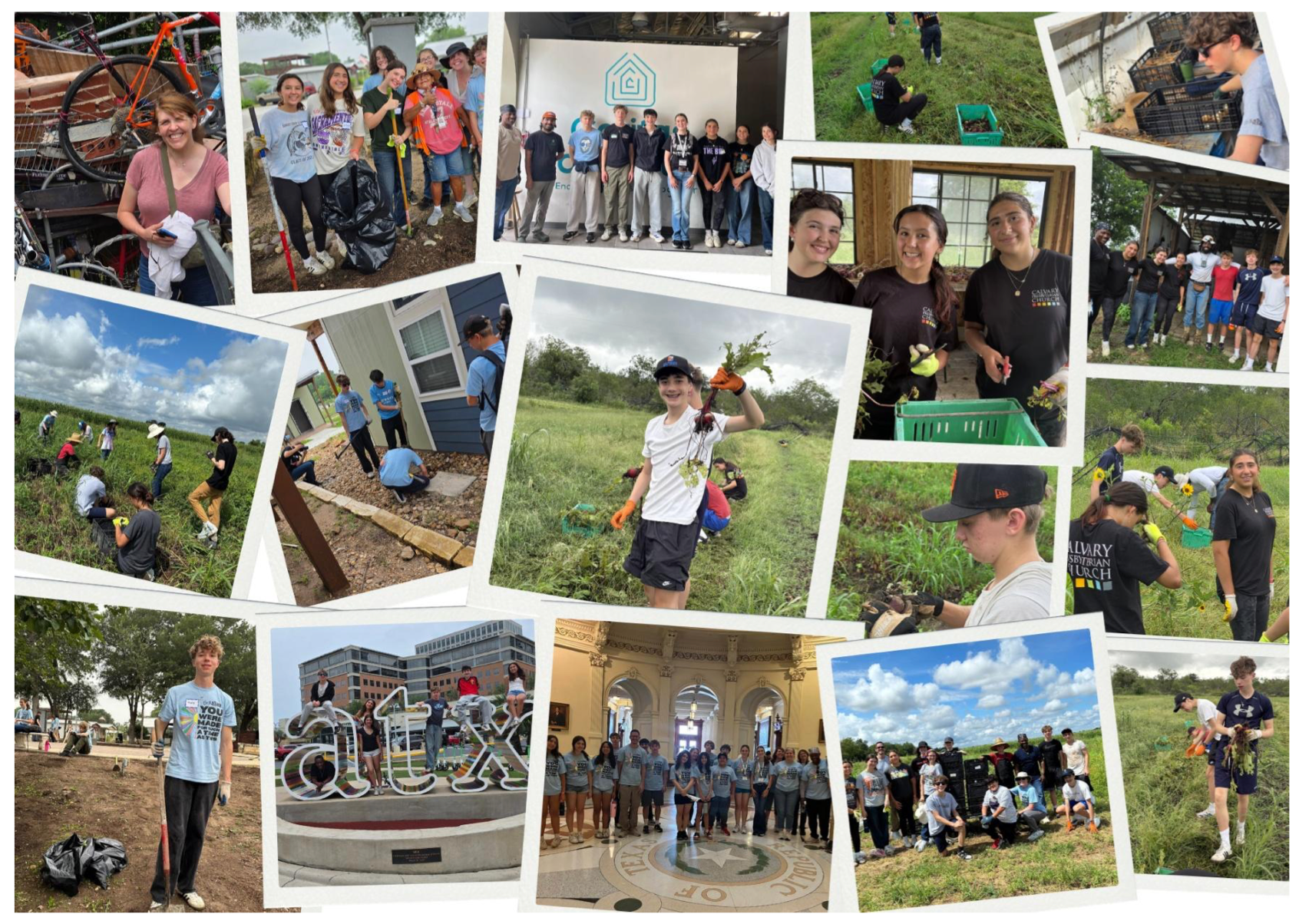
What might that look like here at Calvary? Do y’all see the abundance of our blessings as a congregation? From our beautiful facility, and the beautiful staff with whom I have the privilege to work, to the amazing resourcefulness of the congregation. You help our mission partners by providing care in our community. You help our immigrant neighbors with care and with advocacy. You offer your gifts of music and hospitality and service—in worship leadership, baking cookies for coffee hour, or being a welcoming presence at the front door to worship. The list could go on and on an on.
What grace are we leaving for others to glean from our abundance and blessings?
The session is working right now on updating our vision and mission, and you’ll hear a lot more about it in a few weeks. But we’re wondering what it looks like for us
— to nurture deep roots to build our church community, so we can show up — in person, for each other, in this city. Showing up is itself a spiritual practice. Community doesn’t happen automatically; we build it intentionally, one gathering at a time.
— to widen our welcome so people who are thirsty for community but who thought religion wasn’t for them might find their way through our doors, giving people space to construct—or reconstruct—a faith built around love, and grace, and hope; letting go of faith built around fear and exclusion and judgment.
— and to act courageously, not to be provocative, but to be faithful to the call of scripture to welcome the migrant, to feed the hungry, to worship God and not caesar. What if the world knew what the Bible actually said about love and welcome because they saw you living it out?
What kind of grace might people glean if we do all that? What if this is what church was always meant to be?
Amen.
Benediction
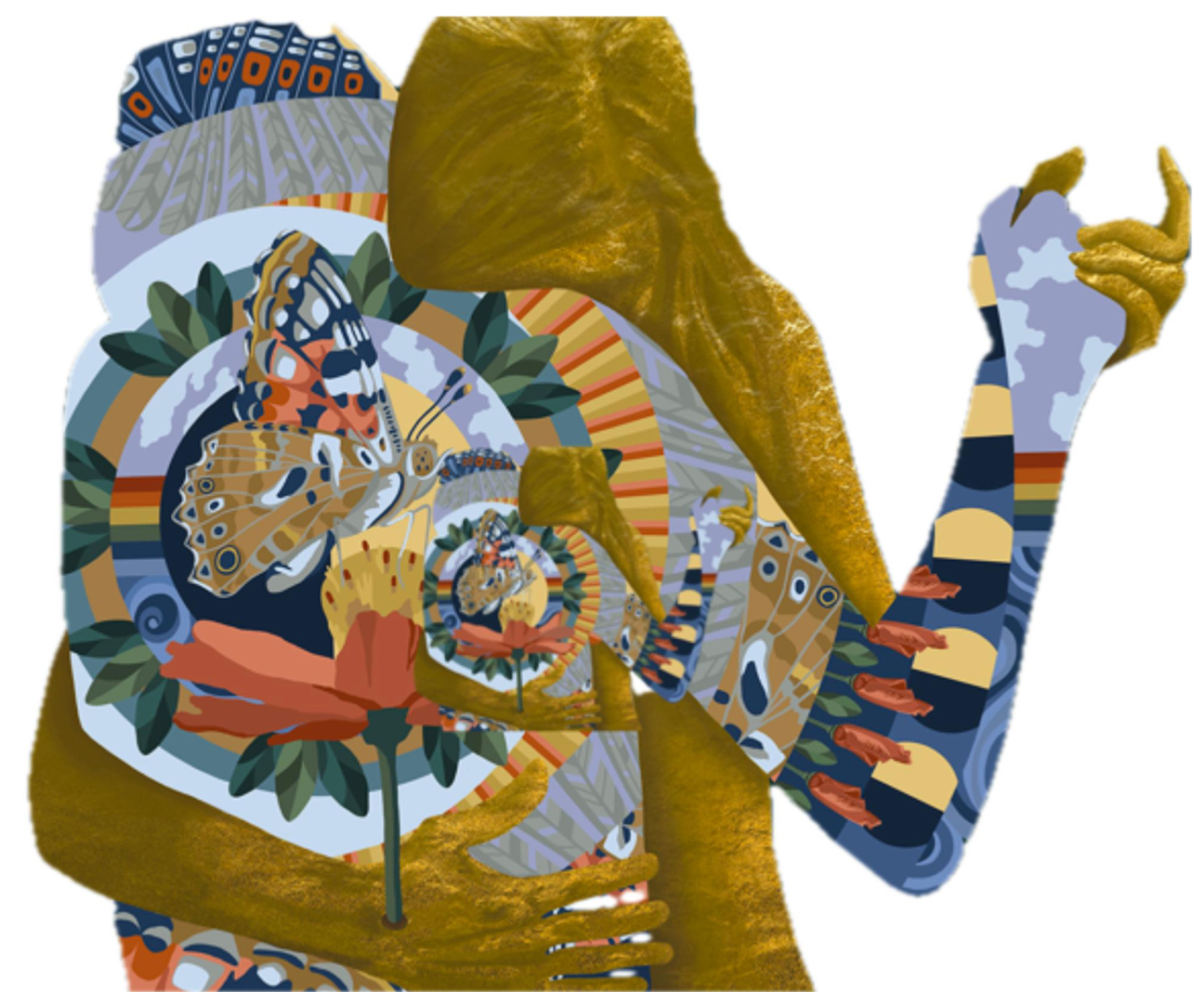
Poet, artist, and minister Jan Richardson wrote a blessing that made me think of Ruth, gleaning in the fields:
“Blessing Fragments”
by Jan Richardson
Cup your hands together,
and you will see the shape
this blessing wants to take.
Basket, bowl, vessel:
it cannot help but
hold itself open
to welcome what comes.
This blessing
knows the secret
of the fragments
that find their way
into its keeping,
the wholeness
that may hide
in what has been
left behind,
the persistence of plenty
where there seemed
only lack.
Look into the hollows
of your hands
and ask
what wants to be
gathered there,
what abundance waits
among the scraps
that come to you,
what feast
will offer itself
from the fragments
that remain.