October 24 Calvary Art Show: Processing the Pandemic
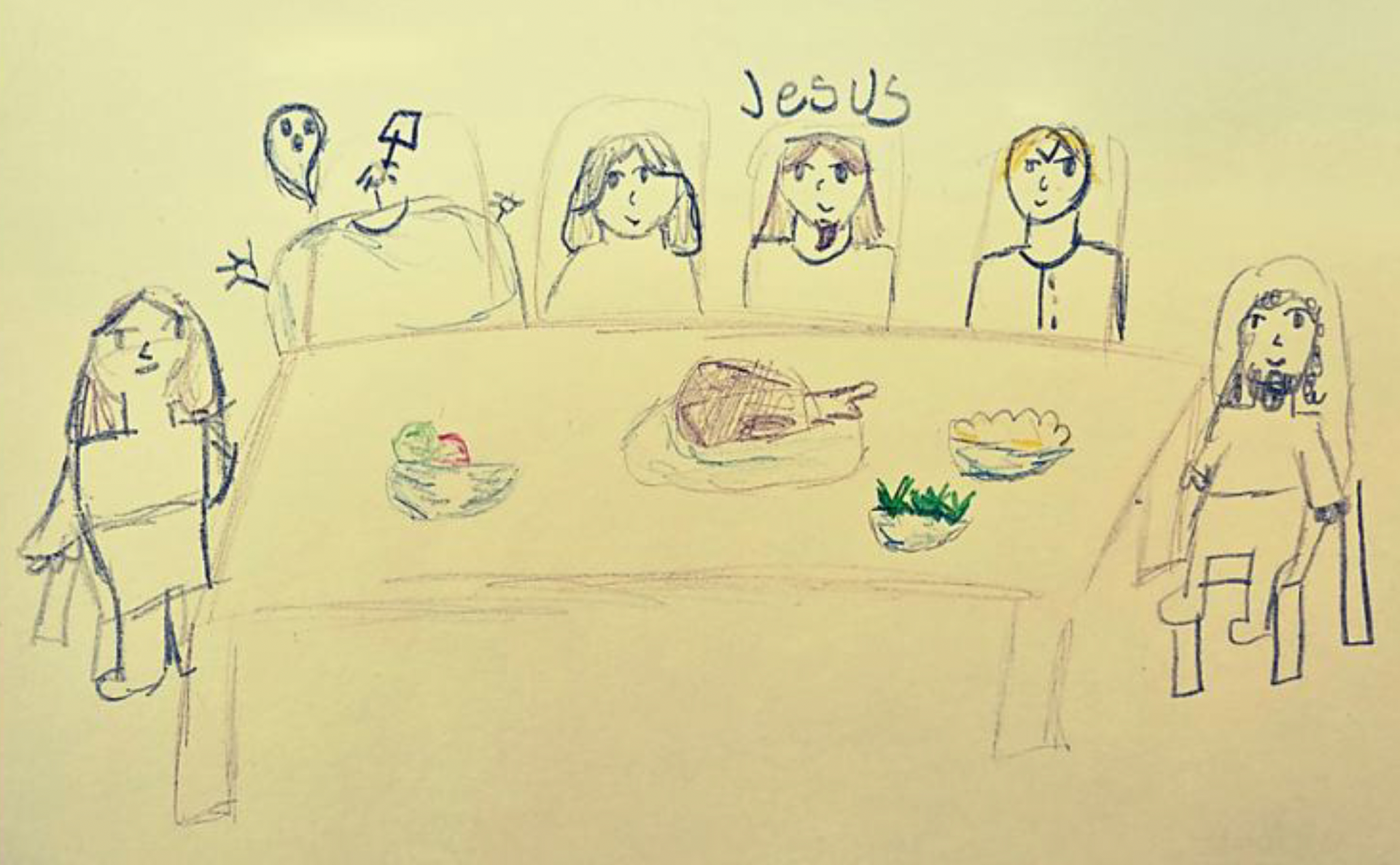
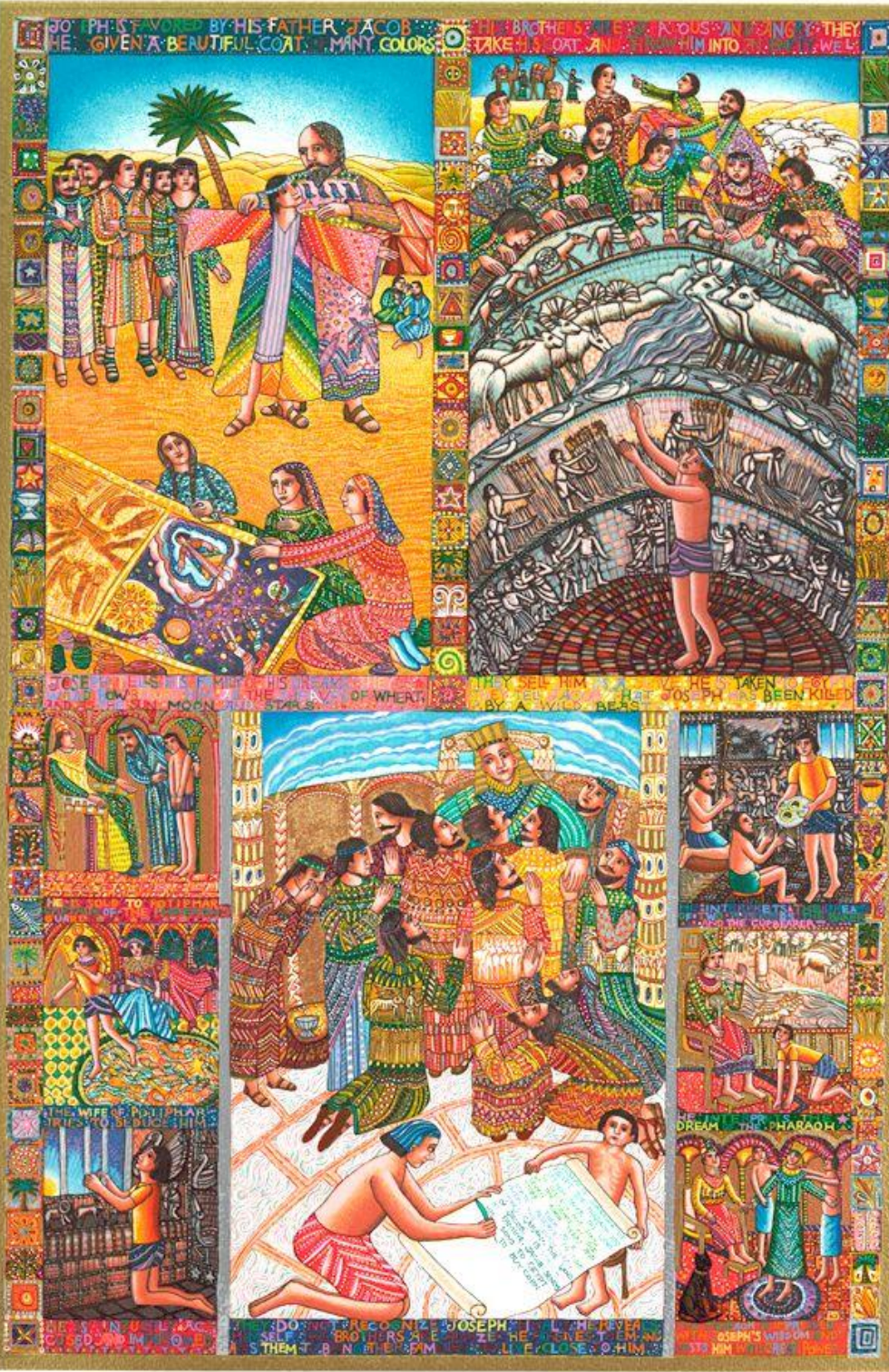
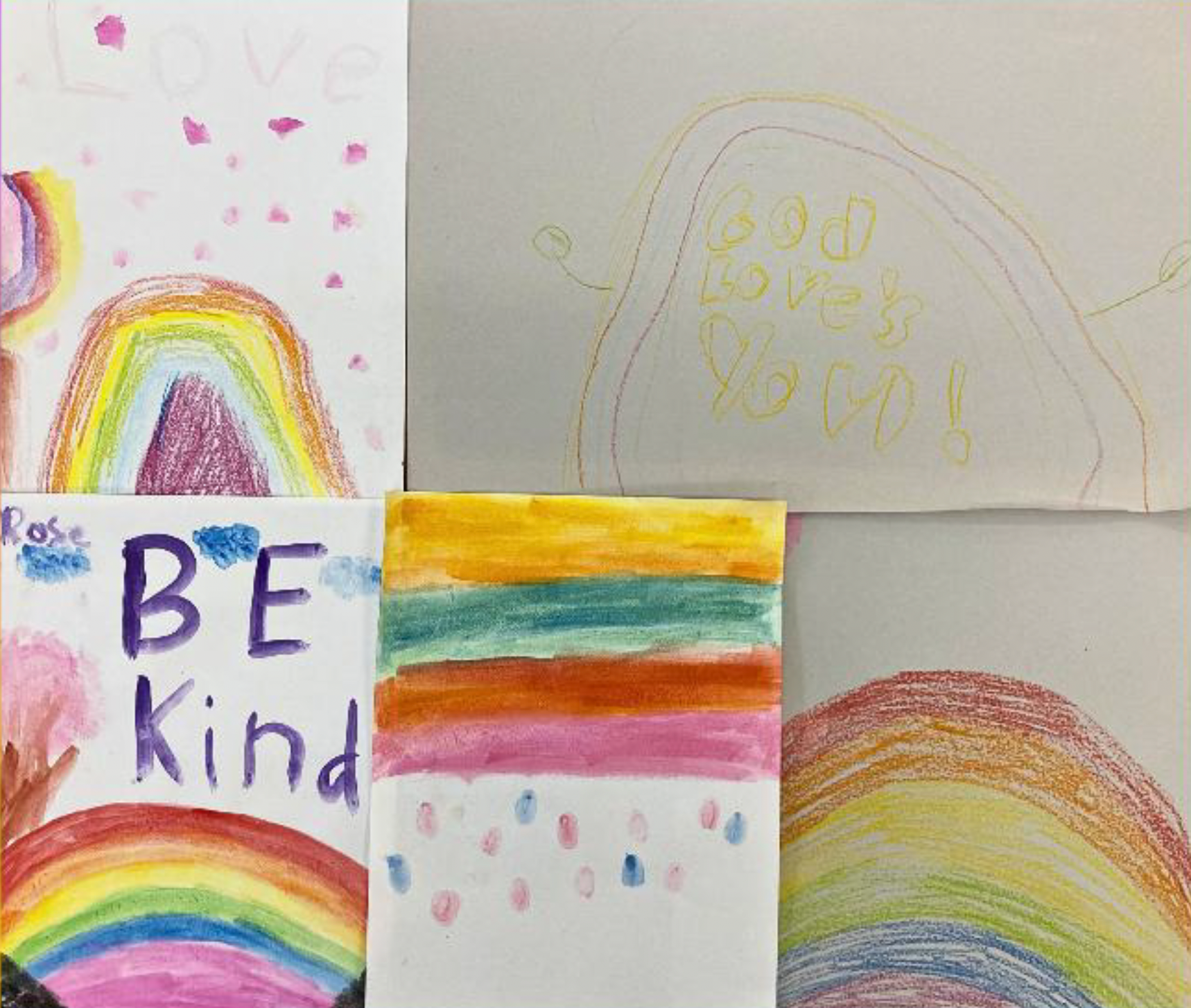
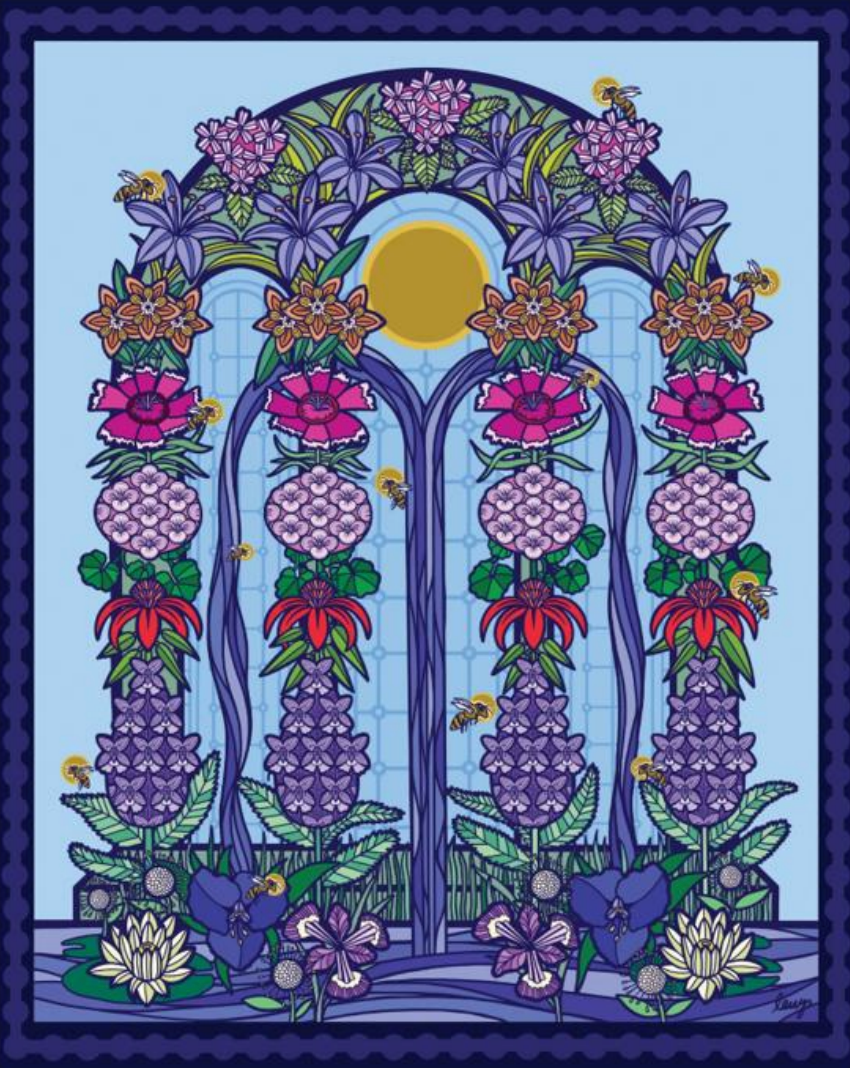
We look forward to seeing you at the intergenerational exhibition of art works created by people during the 2020-2021 year. Join us after the worship service on October 24 in the Calvary Presbyterian Church Lounge. Artists of all ages will be available to share the approaches used to create art and process the effects of Covid-19.
For years we have known that the physical, emotional, and spiritual act of creating art is healing and transformative. Playing with color, feeling a texture, or making a shape concretely helps us make meaning and soothe our racing brains and hearts. Over the years I have heard similar responses when someone is asked if they do art, math, or minister to people. The answer is usually, “I am not a ________ (artist/mathematician/minister).” Or “___(Art/Math/Ministering) is too hard.” It is true that one generally needs an academic degree to curate an art show at a museum, teach math at a high school or be called as a head pastor at a church. Most often we are not aiming for those careers, but are still interested in living a life filled with art, mathematical wonders, and ministry moments. We may not like the result of our work, but can begin to look at it as an energy-producing dynamic process rather than a panicky hope for end-result perfection and approval. As we practice trying new things our brains grow and we let go.
Once someone told me that I was a minister even though I had never attended seminary. I was simultaneously embarrassed and emboldened. I realized that the comment followed protestant theological themes such as: encouraging each person to read the Bible while noticing personal reactions, questions, connections, and inspirations, as well as taking the step to act for justice even if one feels that the small action is a drop in the bucket. Our experience of art, math and ministering is whole and real even if the process might seem informal and not sanctioned by an expert. Early childhood education is built upon child-led process not on how perfectly a child imitates direct instruction. Children, youth, and adults seem to function best when there is a guiding framework for a proposed activity, but not a formulaic way to complete it. One may think that representational art or physics have beaux arts or academy formulas that achieve a successful or predictable result. We know that change-makers followed their own route and arrived at compelling results even when not following the formulas
During the pandemic, I worked remotely and tried to connect in new ways with my family at home. I made many videos for worship services, dropped off and mailed faith-formation packets to Calvary families, and tried to do meaningful activities with two teens who rarely left home because of full-time online school instruction. I thought that dopamine levels would temporarily increase if we picked up junk food at the local corner store, went to get boba tea, or roller skated near where the goats were eating ivy and blackberry brambles at Sutro Tower in the middle of San Francisco. These attempts to boost morale were short-lived, as my kids really wanted to be with their friends and enjoy a regular schedule.
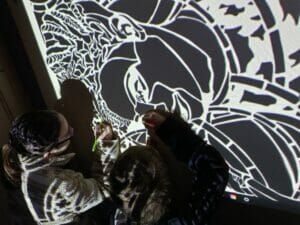
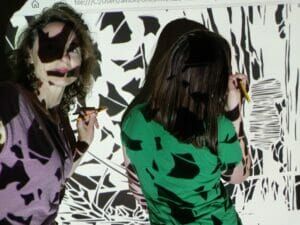
As I prepared for Advent 2020 and Lent 2021 I found novel liturgical banner projects created by A Sanctified Art and Hannah Garrity that served as a home faith-formation family process that involved art, math, and ministry. I had seen Hannah Garrity’s monumental paper-lace banner depicting water displayed on the conference stage at the Association of Presbyterian Christian Educators in Galveston, Texas a few years prior. After dinner at home during both pandemic holy seasons, I turned off the kitchen lights, projected Hannah Garrity’s
Holy Family paper-lace banner design from Those Who Dream liturgy and curriculum and
Drawn to Love from Again & Again, as well as turned on the music playlist. The 6th and 9th grader both helped me draw around the black and white shapes onto the 53” x 70” thick cream colored photo studio backdrop paper. We turned on the lights to see the penciled-in abstract shapes and then took ten steps back in order to see the stunning comprehensive image. After the initial night we spent a few evenings cutting out the shapes with box cutters. As the days wore on the kids abandoned the process and I finished the difficult parts, such as Mary’s intricately braided hair or the wheat grains in the sheaves. We were able to post the
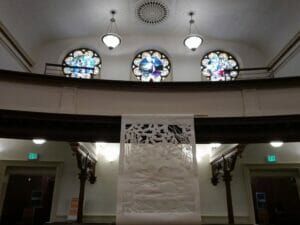
Holy Family banner on the Calvary Presbyterian Church Instagram and Facebook pages in time for Christmas. I hung this banner on my living room wall, so it was my background in most Zoom meetings that I attended during the pandemic. It was thrilling to hang the
Drawn to Love banner in the sanctuary for our first in-person 2021 Good Friday and Easter services. I think that my two youth were proud of their collaborative work, as well as heartened to see the banner as a part of the Holy Week visio divina sanctuary element. Visio divina is a visual meditative process similar to that of the audio Lectio divina. Church workers often do what is in their job descriptions, but most of the time we do the jobs that arise. These banners arose into my life without prompting from a pastor or team. Working together with my teens was a gift of life-giving synergy of art, math, and ministry.
Blessings,
Alison